

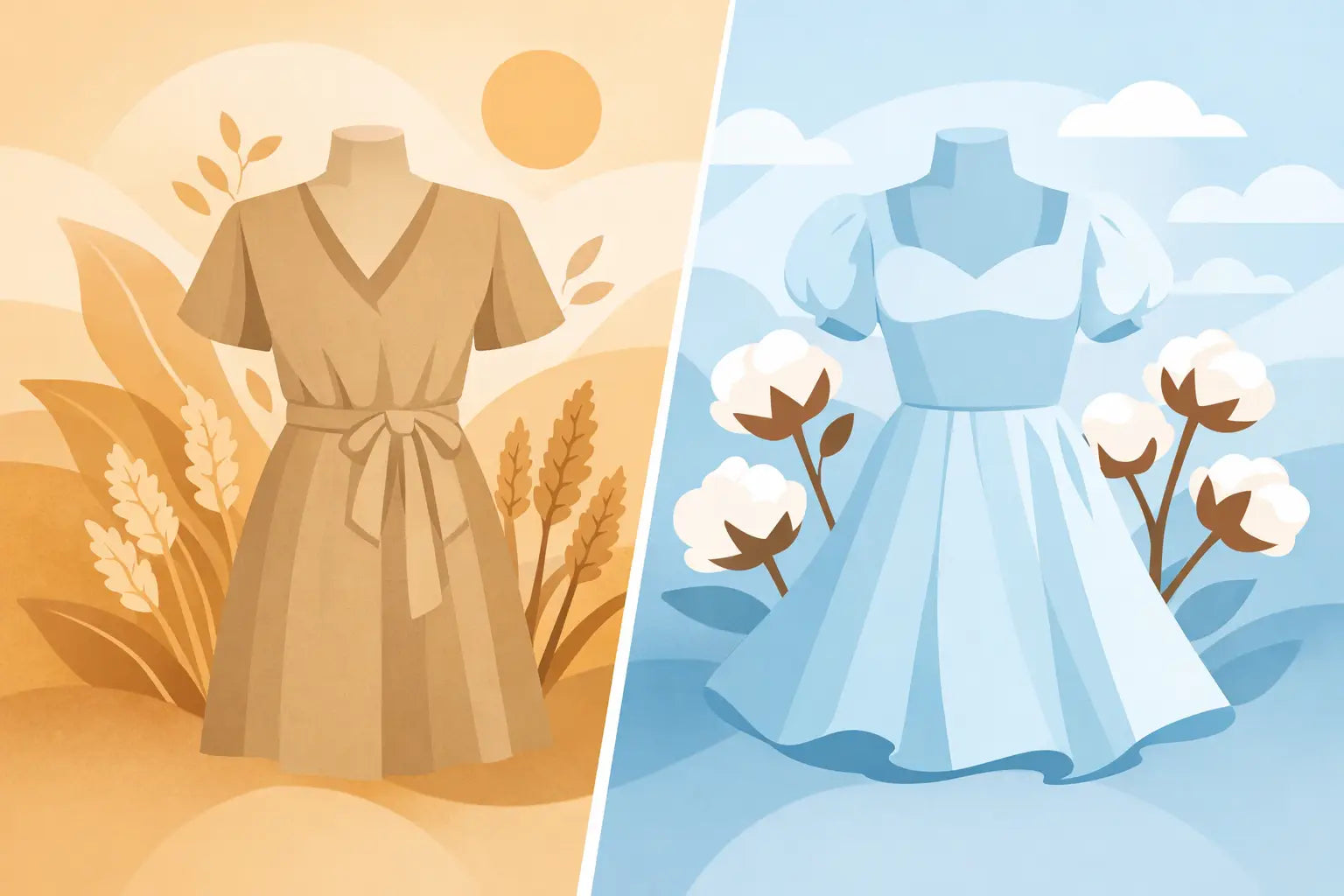
Linen Dresses Versus Cotton Dresses
That moment when you are getting dressed for a hot morning commute, a weekend lunch, or a flight with one carry-on bag usually comes down to fabric. Linen dresses versus cotton dresses is not a small style debate. It shapes how polished you look by noon, how comfortable you feel by 3 p.m., and how often a piece earns its place in your wardrobe.
For a modern, repeat-wear closet, both fabrics make sense. Both are natural. Both are breathable. Both can look elevated when the cut is right. But they do not wear the same, and they do not serve the same mood. If you are building a tighter, smarter wardrobe, the better question is not which one is best. It is which one works harder for the way you actually dress.
Linen dresses versus cotton dresses: what really changes
At a glance, linen and cotton can seem interchangeable. They are both warm-weather staples and both fit naturally into minimal dressing. On the body, though, they behave very differently.
Linen is made from flax fibers, which gives it a crisp hand feel, a dry touch, and that recognizable airy structure. It tends to sit slightly away from the body rather than cling to it. That is part of why linen dresses feel so easy in heat. Air moves through the fabric well, and the shape often looks relaxed without feeling careless.
Cotton comes from natural plant fibers too, but it usually feels softer and smoother from the first wear. Depending on the weave, cotton can look clean and crisp or soft and fluid. It often reads a little more familiar and a little less directional than linen. That is not a weakness. In many wardrobes, it is exactly why cotton becomes the default.
The difference is less about better versus worse and more about finish. Linen gives you texture, breathability, and an effortless line. Cotton gives you softness, versatility, and easier structure across more dress types.
Breathability, comfort, and heat
If your priority is staying cool, linen usually leads. Its fibers allow better airflow, and it tends to absorb moisture without feeling heavy right away. In hot, humid weather, that matters. A linen dress can feel light and dry even after hours outdoors, which makes it especially strong for resort wear, summer city dressing, and travel in warm climates.
Cotton is breathable too, especially in lighter weaves like poplin or voile. But not all cotton dresses are equal in heat. A crisp cotton poplin shirt dress will feel different from a heavier jersey cotton midi. Some cotton fabrics can trap more warmth or hold onto moisture longer, depending on construction.
This is where lifestyle matters. If you spend most of your day moving between air-conditioned offices, cars, and indoor spaces, cotton may feel perfectly comfortable and easier to wear across a longer day. If you walk often, live in sustained heat, or want clothing that feels fresh outdoors, linen has a clear advantage.
The look: relaxed texture or clean polish
Fabric changes silhouette. It changes the mood of a dress before color or styling even enters the picture.
Linen has texture built in. That texture gives even simple shapes a refined, lived-in quality. A minimal linen midi, a sleeveless shift, or a loose button-front style can look quietly elevated with very little styling. The fabric does some of the visual work on its own. It fits especially well with a modest, modern wardrobe because it creates presence without needing excess detail.
Cotton can go in more directions. It can feel crisp and tailored, soft and casual, or smooth and feminine depending on the weave and finish. If you want a dress that shifts easily from workwear to weekend, cotton often offers more options. A cotton shirt dress can look sharp enough for meetings and still feel easy off duty. A structured cotton blend can hold shape beautifully in fit-and-flare or more defined silhouettes.
If your personal style leans clean, minimal, and slightly undone, linen often feels more aligned. If you want a more polished blank canvas or more silhouette variety, cotton may win.
Wrinkles are part of the answer
Wrinkles are where many shoppers decide quickly, but the real answer is more nuanced.
Linen wrinkles easily. That is true. It creases at the waist, around the elbows, and anywhere the body bends. For some, that is a dealbreaker. For others, it is part of the fabric’s appeal. Linen does not look ruined when wrinkled. It looks natural, relaxed, and human. In the right cut, those creases can still read chic.
Cotton usually wrinkles less, though this depends on the weave. Poplin can crease. Jersey barely does. Brushed or heavier cottons tend to look more stable throughout the day. If you need your dress to look sharper for longer with less maintenance, cotton often feels easier.
The better question is what kind of polish you prefer. Linen offers soft imperfection. Cotton offers neater consistency. Neither is wrong. They simply project different forms of ease.
Care and longevity
If you are shopping with longevity in mind, both linen and cotton deserve space in a consciously designed wardrobe. They are natural fibers, wearable across seasons, and often far more repeatable than trend-led synthetics. Still, they ask for slightly different care.
Linen becomes softer over time, which is one of its strongest qualities. A good linen dress often improves with wear. It can start crisp and become more fluid after repeated washing. The trade-off is that linen may need steaming or light pressing if you want a cleaner finish.
Cotton is often simpler for daily care. Many cotton dresses can be machine washed and worn with less fuss, especially if the fabric is midweight or textured enough to hide minor creases. Cotton can also be very durable, though thinner cottons may lose structure sooner than a quality linen weave.
For shoppers building a smaller wardrobe, maintenance matters. If you want pieces that feel low effort on busy weekdays, cotton can be the more practical choice. If you are comfortable with a little fabric character and a bit more post-wash care, linen rewards that attention.
Best uses for linen dresses
Linen dresses are especially strong when ease is part of the brief. They work well for summer workwear with relaxed tailoring, vacation packing, warm-weather events, and off-duty dressing that still looks considered. They also layer beautifully with minimal staples - flat sandals, a clean blazer, a lightweight knit, simple leather accessories.
The best linen styles are often uncomplicated. Think straight silhouettes, waisted midis, shirt dresses, or softly oversized cuts. The fabric already brings visual texture, so it rarely needs much added design. If you like clothing that feels calm, breathable, and quietly premium, linen tends to deliver.
Best uses for cotton dresses
Cotton dresses shine when versatility leads. They are often ideal for long workdays, transitional weather, everyday errands, and situations where you want comfort without looking too relaxed. Cotton also tends to support more precise construction, so if you prefer dresses with defined waists, fuller skirts, or cleaner tailoring, you may find more options that hold their shape well.
They are also useful for layering. A cotton dress can sit neatly under a blazer, trench, or knit without the natural slouch that some linen pieces bring. For city wardrobes, office dressing, and year-round wear, that flexibility is valuable.
Which fabric makes more sense for a capsule wardrobe?
If you are choosing carefully rather than shopping broadly, start with how and where you dress most often.
Choose linen if heat, travel, and breathable day-to-night dressing are high on your list. It is especially useful if you love neutral palettes, relaxed tailoring, and pieces that look elevated without trying too hard. A linen dress can become the summer item you reach for repeatedly because it feels good before it even looks good.
Choose cotton if you want one dress to cover more ground. It is often the better all-rounder for mixed schedules, more structured styling, and easier care. If your wardrobe needs reliability first and texture second, cotton earns its place fast.
Many modern wardrobes need both. At ZAVI, that balance makes sense - linen for airy, minimal ease and cotton for refined everyday function. The smartest closet is rarely built on one fabric alone.
Linen dresses versus cotton dresses for real life
The most useful comparison is not on a fabric swatch. It is in real use. What do you reach for on a humid Monday, on a weekend trip, on a long lunch outside, or on a day when you need to look composed with almost no effort?
Linen is for movement, airflow, and understated texture. Cotton is for softness, structure, and wider day-to-day range. One is not the upgrade of the other. They simply solve different style problems.
If you are deciding between them, think beyond trend and into wear frequency. The right dress is the one that works with your climate, schedule, and sense of polish. Buy for the life you have, not the version of it that only exists on vacation. That is usually where the best wardrobe choices begin.