

How to Wear Tailored Separates Well
A great blazer and a great trouser do not always make a great outfit. That is the difference between owning tailored pieces and knowing how to wear tailored separates. The styling matters - proportion, fabric, color, and where the outfit needs to go. Get those right, and tailored dressing feels easy, modern, and repeatable.
Tailored separates work because they give you structure without locking you into one full suit. You can dress them up for work, break them apart for weekends, and build more looks from fewer pieces. For a wardrobe built on longevity, that flexibility is the point.
How to wear tailored separates without looking overdone
The easiest mistake is treating every tailored piece like formalwear. A blazer, waistcoat, or structured pant can feel sharp, but the outfit should still reflect real life. The cleanest looks usually balance one polished piece with something softer, lighter, or more relaxed.
Think of tailoring as the anchor. Then adjust the rest of the look around it. A crisp blazer with fluid wide-leg pants feels different from the same blazer with denim. A waistcoat with matching trousers reads refined, while that same waistcoat over a cotton tee feels more off-duty. The appeal of separates is exactly this range.
Fabric does a lot of the work. Linen and cotton tailoring look more relaxed than dense synthetics or heavily padded suiting. They hold structure, but not too much. In warm weather, that matters visually and physically. Breathable fabrics keep tailored dressing from feeling stiff.
Fit matters just as much, but not in the old sense of everything being skin-close. Modern tailoring tends to look better with ease. A slightly relaxed shoulder, a straighter leg, or a longer blazer line often feels more current than anything too cropped or tightly fitted. Sharp does not have to mean restrictive.
Start with proportion, not pieces
If you are figuring out how to wear tailored separates consistently, start with silhouette. Proportion is what makes an outfit feel intentional.
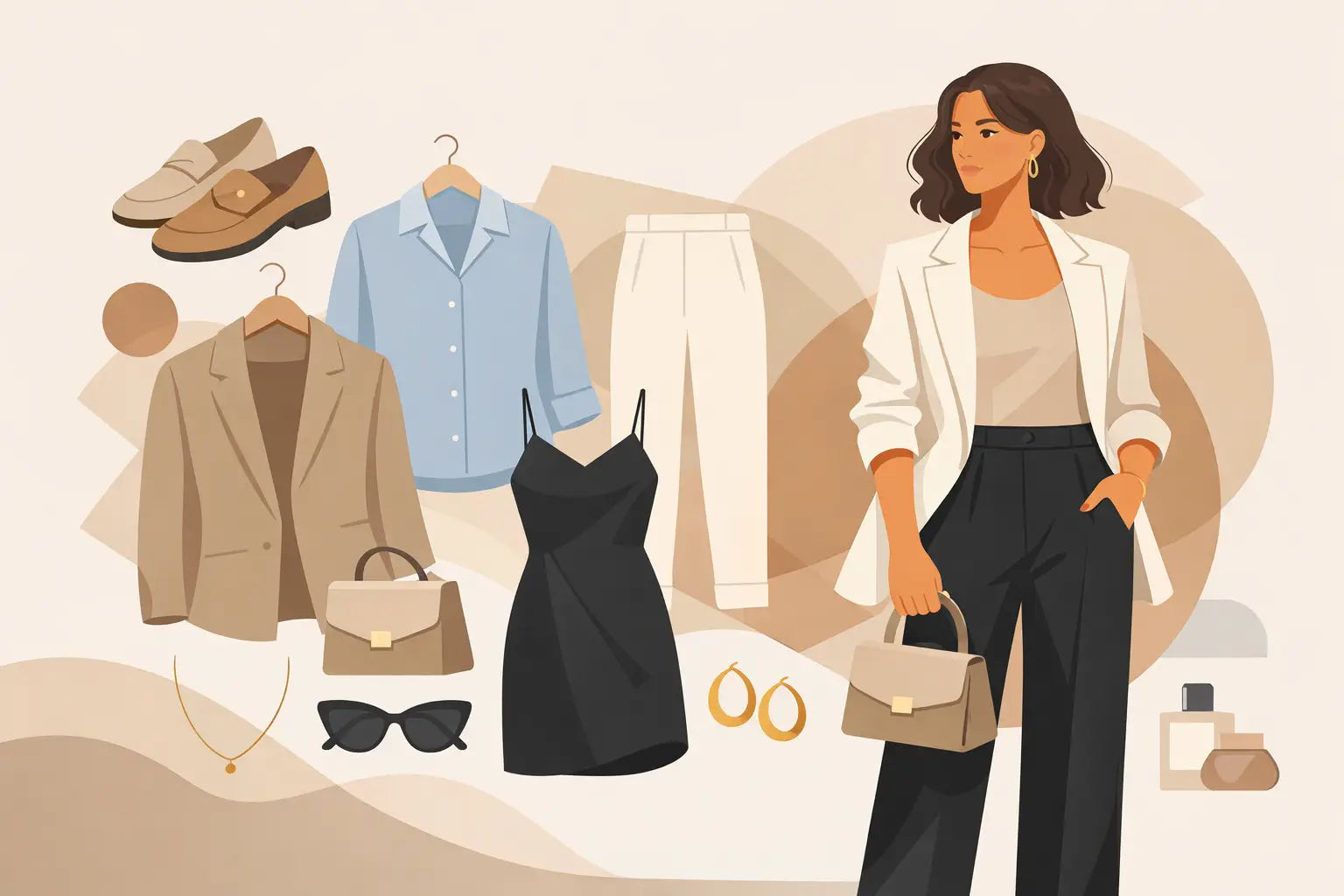
When the blazer is oversized or longline, keep the base layer cleaner and closer to the body. A fitted tank, a fine knit, or a simple shirt keeps the shape controlled. If the trousers are wide-leg or pleated, a neater top prevents the outfit from becoming heavy. On the other hand, if you are wearing a slim cigarette trouser, you can afford more volume on top.
The same rule applies to skirts and shorts. Tailored Bermuda shorts work well with a relaxed button-down or a matching vest because the hemline keeps the outfit lighter. A tailored midi skirt often looks strongest with a structured shirt or compact knit rather than anything too draped.
This is where mirrors help more than formulas. If the look feels bulky, remove volume from one area. If it feels severe, add softness through texture or a more relaxed underlayer. Tailored outfits are rarely about one hero item. They are about shape in motion.
Build around a restrained color palette
Tailored separates look more elevated when the palette is controlled. That does not mean everything has to be beige, black, or white, but it does mean color should feel deliberate.
Neutrals are useful because they make mixing easier. Sand, ivory, navy, black, olive, stone, and soft brown all work hard in a capsule wardrobe. They also highlight cut and fabric, which is where tailored pieces usually shine. A linen blazer in ecru or a cotton trouser in camel can carry an outfit without needing much else.
If you prefer more color, keep the styling simple. A muted sage trouser with a white shirt and tan sandal still reads polished. A deep rust blazer with cream pants can feel rich and modern. The trick is not to add too many competing tones at once.
Monochrome is one of the easiest ways to make separates feel expensive. Matching close shades rather than exact ones creates depth without looking forced. Cream with oatmeal, black with charcoal, or navy with slate all work. It is polished, but not rigid.
Use one tailored piece to sharpen casual basics
One of the best things about separates is how easily they elevate what you already wear. A blazer over a tank top and relaxed jeans is an obvious example because it works. The structure of the jacket cleans up the whole look.
The same idea works with a waistcoat, tailored short, or pleated pant. Pair them with ribbed basics, compact tees, polished flats, or minimal sneakers. The contrast keeps the outfit modern. Too many tailored items at once can look overly corporate unless the fabric and styling are relaxed.
This is especially useful for transitional dressing. A lightweight blazer over a sleeveless dress, or tailored trousers with a simple cotton shirt, gives enough structure for work or meetings without feeling too formal for the rest of the day. You look finished, not overdressed.
Let matching sets do part of the work
There is no rule that tailored separates need to contrast. Sometimes the smartest move is to start with a coordinated set, then break it apart later.
A matching blazer and trouser set gives you an instant base. From there, the styling decides the mood. Wear it with a button-down and loafers for a sharper office look. Switch to a knit tank and flat sandal, and it reads lighter. Add a waistcoat instead of a shirt, and the outfit feels cleaner and more directional.
This is why consciously designed matching pieces earn their place in a wardrobe. You get the ease of a full look and the flexibility of separates. That kind of repeat wear matters more than novelty.
Keep layers clean and intentional
Tailored dressing does not need many layers. It needs the right ones.
Under a blazer, choose pieces that sit neatly. Fine-gauge knits, cotton poplin shirts, sleeveless shells, and fitted tees all work because they do not fight the jacket. Bulky hoodies or oversized tops can work, but they create a different look - more streetwear, less refined. Neither is wrong. It depends on the setting.
For warmer climates, lighter layers make more sense than piling on structure. A linen blazer over a sleeveless top, or a waistcoat worn on its own with wide-leg pants, feels polished without excess. Breathability is part of good styling, not an afterthought.
Accessories should follow the same logic. Keep them minimal and useful. Clean leather sandals, loafers, low heels, sleek sneakers, and structured bags all support tailored pieces well. If the outfit already has strong lines, there is no need to crowd it.
Dress for the setting, not the category
The phrase tailored separates can sound office-specific, but that is too narrow. These pieces can move across work, travel, dinners, and weekends if you style to the occasion.
For work, sharper combinations usually make sense. A blazer with straight trousers, a poplin shirt, and simple loafers feels credible and easy. For creative offices or less formal settings, a soft blazer over a knit top with wide-leg pants feels current without losing polish.
For travel, comfort becomes non-negotiable. Choose breathable fabrics with some ease through the leg and shoulder. Linen blends, cotton suiting, and unstructured blazers perform better than anything too heavy or clingy. Tailoring should support movement.
For evenings, the formula gets simpler. A black waistcoat with fluid trousers, or a cream blazer over a tonal slip dress, often looks stronger than anything heavily styled. Clean lines do enough.
Common mistakes when styling tailored separates
The first is forcing a full suit mindset onto every piece. Not every blazer needs formal trousers, and not every tailored pant needs a matching jacket. Often the better look is the less obvious one.
The second is choosing fabric that does not match your lifestyle. If you live in a warm climate, heavy suiting may stay in the closet while cotton and linen get worn constantly. The most polished wardrobe is the one you actually reach for.
The third is ignoring balance. If everything is sharp, the outfit can feel hard. If everything is loose, it can lose definition. The best tailored looks usually sit somewhere in the middle.
A modern formula to come back to
If you want one reliable approach, build from three elements: one structured piece, one soft piece, and one clean finishing element. That could mean a blazer, a cotton tank, and a leather flat. Or pleated trousers, a fine knit, and a minimal sandal. Or a waistcoat, relaxed denim, and a sharp bag.
That mix keeps tailored dressing wearable. It also makes outfit repeating easier, which is where good wardrobes are built. ZAVI's approach to modern essentials follows that same logic - pieces that feel elevated, breathable, and easy to style more than one way.
The real goal is not to make tailored separates look impressive. It is to make them feel natural on you. Once the fit is right and the styling is pared back, they stop being occasion pieces and start becoming the foundation of how you get dressed.