

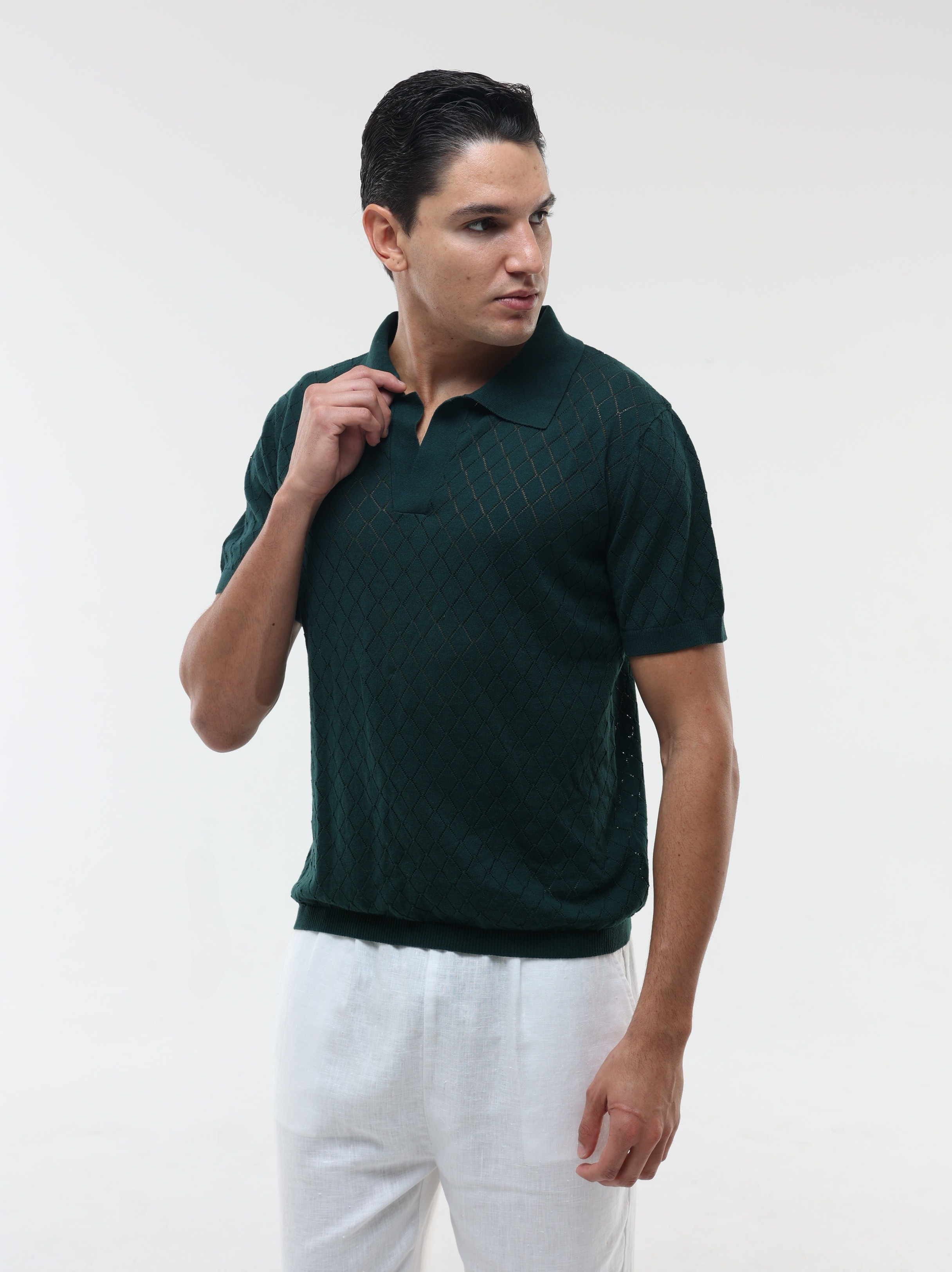

How to Spot Greenwashing in Fashion
A swing tag says "conscious." A product page says "eco." The campaign is all soft neutrals, leafy sets, and careful words. Yet none of that tells you much about how a garment was actually made.
That is the problem with greenwashing in fashion. It often looks polished. It sounds responsible. And it is built to make you feel better before you have enough information to judge the piece.
If you care about style and substance, knowing how to spot greenwashing fashion claims is part of shopping well. Not perfectly. Just clearly.
What greenwashing looks like in fashion
Greenwashing happens when a brand presents itself as more sustainable than it really is. Sometimes that means broad marketing language with very little proof. Sometimes it means highlighting one better detail while avoiding the bigger picture.
A blazer made with a small percentage of recycled fiber might be marketed as a sustainable essential, even if the rest of the fabric is conventional synthetics and the brand shares nothing about production. A collection might be called "responsible" because it uses better packaging, while the garments themselves are designed for short-term wear. The claim is not always fully false. It is often selective.
That is what makes it tricky. Greenwashing usually lives in the gap between the impression a brand creates and the evidence it provides.
How to spot greenwashing fashion marketing
The fastest way to assess a brand is to separate image from information. Start with the actual claim. Then ask what supports it.
If a website relies on words like "green," "earth-friendly," "mindful," or "better for the planet" without explaining materials, manufacturing, or product lifespan, that is a signal to slow down. Vague language is not the same as transparency.
The same goes for single-word badges. "Sustainable" on its own means almost nothing. Better brands usually get more specific. They tell you whether a shirt is linen, organic cotton, or a blend. They explain why that choice matters for wear, breathability, or reduced reliance on synthetic fibers. They do not expect you to trust the aesthetic alone.
Another common tactic is the tiny better-detail strategy. A brand may spotlight one improved feature, like recycled buttons or compostable mailers, while staying silent on the fabric, dyeing process, or factory standards. That does not automatically make the item misleading, but it does mean the headline may be doing more work than the garment itself.
There is also the limited "eco collection" approach. If a brand launches a small conscious edit while the rest of its model still depends on constant overproduction, ultra-low prices, and disposable quality, it is fair to question the overall commitment. A capsule can be a real step forward. It can also be a shield.
Read the fabric label before the brand story
If you want a more grounded way to shop, start with composition. Fabric will not tell you everything, but it tells you more than most campaigns do.
Natural and plant-based fibers like linen and cotton can be strong starting points, especially for everyday dressing, warmer climates, and repeat wear. They are breathable, comfortable, and often more aligned with long-term use than trend-driven synthetic pieces. But even here, context matters. A natural fiber garment is not automatically low impact if the brand reveals nothing else.
Synthetic-heavy blends deserve a closer look, especially when they are presented as premium sustainable choices without clear reasoning. Recycled polyester, for example, can be part of a better materials strategy in some categories. But if every "eco" piece is still mostly plastic-based, that should prompt more questions. Better than before is not the same as genuinely considered.
Look for brands that explain material choices in plain language. Not just the fiber name, but why it was chosen and how it fits the garment's purpose. When a brand is confident in its construction, it usually does not hide behind general claims.
Watch for missing details on the product page
A trustworthy product page tends to answer practical questions. What is the fabric composition? Where was it made? How should it be cared for? What kind of fit and longevity should you expect?
When sustainability is part of the pitch, the page should also support that with real specifics. If a product is described as consciously designed, the details should show what that means. If they do not, the phrase may be decorative.
This matters because informed shopping depends on garment-level transparency, not just brand-level messaging. A beautiful homepage can suggest strong values. A clear product page proves them.
Price can be a clue, but not the full answer
There is no perfect sustainable price point. Expensive does not always mean ethical, and affordable does not always mean irresponsible. Still, extreme pricing often tells you something about the model behind the product.
If a dress is priced so low that it is hard to imagine fair labor, quality fabric, and careful production behind it, skepticism is reasonable. Fashion has real costs. Someone pays them.
At the same time, a high price paired with vague sustainability language is not enough either. Premium branding can hide weak standards just as easily as discount marketing can. The better question is whether the price aligns with the visible quality, material choice, and level of transparency offered.
Look at the whole business model
One of the clearest ways to spot greenwashing fashion brands is to zoom out. Do they encourage repeat wear, versatility, and long-term styling? Or do they rely on endless micro-trends and constant urgency?
A brand built around elevated everyday pieces, seasonless coordination, and fabrics chosen for comfort and longevity is making a different argument than one built around disposable novelty. Neither model guarantees perfect sustainability. But they do point in very different directions.
This is where your own wardrobe habits matter too. The most responsible purchase is not always the garment with the loudest eco label. Often it is the one you will wear for years, across work, weekends, travel, and everything in between.
That is why modern minimal dressing tends to hold up well under scrutiny. Pieces with clean lines, practical fabrics, and strong rewear potential ask less from your closet over time.
Certifications help, but they are not a shortcut
Third-party certifications can add credibility. They show that some part of a brand's process or material standard has been checked by an outside body. That is useful.
But certifications are not a substitute for clear communication. A logo without explanation still leaves gaps. Some certifications apply only to a specific fabric, not the full garment. Others address one issue, such as fiber sourcing, but not labor or durability.
Think of certifications as supporting evidence, not the entire case.
Questions worth asking before you buy
A good test is whether a brand makes it easy to answer simple questions. What exactly is this made from? Why this fabric? Where was it made? How long is it meant to last? Is sustainability described at the item level or only in brand slogans?
You do not need a perfect supply chain map every time you buy a pair of trousers. But you should be able to get beyond mood-board language in a few clicks. If you cannot, the branding may be cleaner than the practices behind it.
If you are building a more intentional wardrobe, it also helps to ask something personal: will this piece earn its place? Can you wear it at least three ways? Does it work with what you already own? Greenwashing thrives on impulse. Clarity slows that down.
The brands that earn trust usually sound different
The most credible brands are rarely the loudest. They tend to speak clearly, not theatrically. They describe what they are doing, where they are still improving, and what each garment actually offers.
That kind of restraint matters. Sustainability is not a design prop. It is a set of choices around fabric, construction, production, and wear. When a brand treats it as a standard rather than a slogan, you can feel the difference.
If you want a useful benchmark, look at how a label talks about materials and repeat wear across its collections, not just in a one-off campaign. On https://Www.shop-Zavi.com, the language around consciously designed pieces and plant-based fabrics reflects a more specific, product-led approach than generic eco messaging alone.
The goal is not to shop with suspicion every second. It is to shop with sharper instincts. Trust the details over the vibe. Trust the fabric label over the tagline. And when a brand makes sustainability feel clear, grounded, and wearable, that is usually a better place to begin.


