

How to Choose Modest Work Dresses
That dress that looks polished at 8 a.m. can feel restrictive by noon, too sheer by afternoon light, and too formal for anything after work. That is usually the moment women start asking how to choose modest work dresses that actually hold up through a full day. The right one should feel considered, comfortable, and easy to repeat - not like a compromise between coverage and style.
For a modern work wardrobe, modesty is less about rules and more about balance. You want enough coverage to feel confident in meetings, enough structure to read professional, and enough ease to wear the piece often. A good modest work dress does not sit in the closet waiting for a specific occasion. It earns its place on a busy weekday.
How to choose modest work dresses for real life
Start with your workday, not the hanger. An office with strong air conditioning, frequent client meetings, and a long commute calls for different choices than a creative studio or a hybrid schedule. The best dress is the one that matches your actual routine.
If your days move between desk work, lunch meetings, and quick errands, prioritize silhouettes that stay polished without constant adjustment. That usually means a dress with enough room through the shoulders and hips, a neckline that does not need layering to feel secure, and a hemline that works whether you are sitting, walking, or stepping in and out of a car.
This is where modest workwear gets more refined. Instead of adding extra pieces to make a dress office-appropriate, choose a dress that was designed to do more on its own.
Fit matters more than trend
A modest dress can still feel off if the fit is too tight, too oversized, or too stiff. The goal is not volume for its own sake. It is clean shape.
A-line cuts, soft shirt dresses, column silhouettes, and gently tailored midis tend to work well because they create structure without clinging. Wrap styles can also be flattering, but they depend heavily on construction. Some need too much adjustment at the bust or neckline to feel reliable for work. If you are constantly checking the fit, it is not the right dress.
Sleeve choice also changes the feel of a dress. Cap sleeves may look polished on the hanger, but for many offices they do not offer enough coverage. Elbow-length sleeves, long sleeves with light volume, or neatly cut short sleeves often strike a better balance. They read intentional, not overly casual.
Pay attention to shoulder seams and waist placement. A dress can technically fit but still feel awkward if the shoulder line drops too low or the waist hits in the wrong place. Small shifts in proportion make a big difference in whether a dress feels elevated or slightly off.
Fabric is where comfort and polish meet
If you want to know how to choose modest work dresses you will keep reaching for, look at the fabric before anything else. A beautiful cut in the wrong material can feel impractical fast.
Natural and plant-based fabrics like cotton and linen are especially useful for warm climates, long workdays, and repeat wear. They breathe better, feel easier on the skin, and support that clean, understated look many women want from modern workwear. The trade-off is that some natural fabrics wrinkle more easily than synthetics. That does not make them less polished, but it does mean fabric weight and finish matter.
A structured cotton poplin dress can feel crisp and office-ready with minimal effort. A heavier linen blend can look refined while staying breathable. Very lightweight linen, on the other hand, may be better for casual settings unless it is lined or sharply tailored.
Opacity matters too. Many dresses look modest in cut but fall short in bright light. Check whether the fabric needs a slip, whether the skirt becomes sheer when backlit, and whether lighter shades hold their structure. Cream, white, and pale beige can be beautiful for work, but only if the fabric has enough density.
Length should work sitting down, not just standing up
Hemline is one of the easiest things to misjudge. A dress may look perfect in the mirror, then feel too short the moment you sit at your desk.
For most workplaces, midi length is the safest and most versatile choice. It offers coverage, moves well, and pairs easily with flats, loafers, heels, or boots depending on the season. Knee-length can also work, but the exact cut matters. A straight, narrow skirt at the knee may ride up more than a softly shaped midi.
Maxi dresses can be office-appropriate, but they depend on fabric and styling. In a fluid material with minimal detailing, they can feel elegant and modern. In a very casual jersey or bohemian print, they may read more weekend than work. It depends on how tailored the overall look feels.
Necklines set the tone
A modest work dress does not need a high neckline to look professional, but it should feel secure in motion. Scoop necks, clean crew necks, refined V-necks, and shirt collars all work well when they sit properly on the body.
The key is proportion. A V-neck can feel polished if it is cut high enough to frame the face without feeling revealing. A crew neck can feel sleek, but if the fabric is too heavy or the fit too close, it may lose that easy effect. Collared dresses are especially useful if you like structure because they add definition without needing much styling.
Details around the neckline also matter. Excessive ties, ruffles, cutouts, or contrast trims can make a dress feel more trend-driven than timeless. If you want repeat wear, keep the focal point simple.
Look for styling range, not single-use appeal
The strongest dresses in a work wardrobe do more than solve one outfit. They support multiple versions of your day.
A minimal dress in a grounded neutral - black, navy, olive, stone, chocolate, or soft blue - has longer range than a highly specific print. That does not mean avoiding print entirely. A subtle stripe, muted floral, or understated geometric can still feel office-ready. The question is whether the dress still looks current after the first few wears.
Think about how the dress layers. Can it sit cleanly under a blazer? Does it work with a lightweight knit over the shoulders? Can you add a waistcoat or structured jacket without bunching the sleeves or distorting the shape? A dress with styling range usually becomes a wardrobe favorite.
This is also where minimal design earns its place. Clean lines make it easier to repeat a dress in fresh ways, which is better for cost per wear and better for a more conscious wardrobe.
Small details tell you if a dress is worth buying
When a dress looks simple, the details carry more weight. Check the lining, the seam finish, the button placement, and whether a belt feels integrated or like an afterthought. Notice if pockets add function without bulk. Look at how the skirt falls when you walk.
Closures matter more than many shoppers expect. A side zipper may create a cleaner front, while a full button front can be practical but should not gape. Elastic waists can be comfortable, but they need enough structure around them to avoid feeling too casual for work.
Color also changes how modest and polished a dress feels. Darker shades often look more formal, but lighter neutrals can feel just as professional when the fabric and cut are strong. If your office leans conservative, saturated neutrals are usually the easiest starting point.
How to choose modest work dresses for a capsule wardrobe
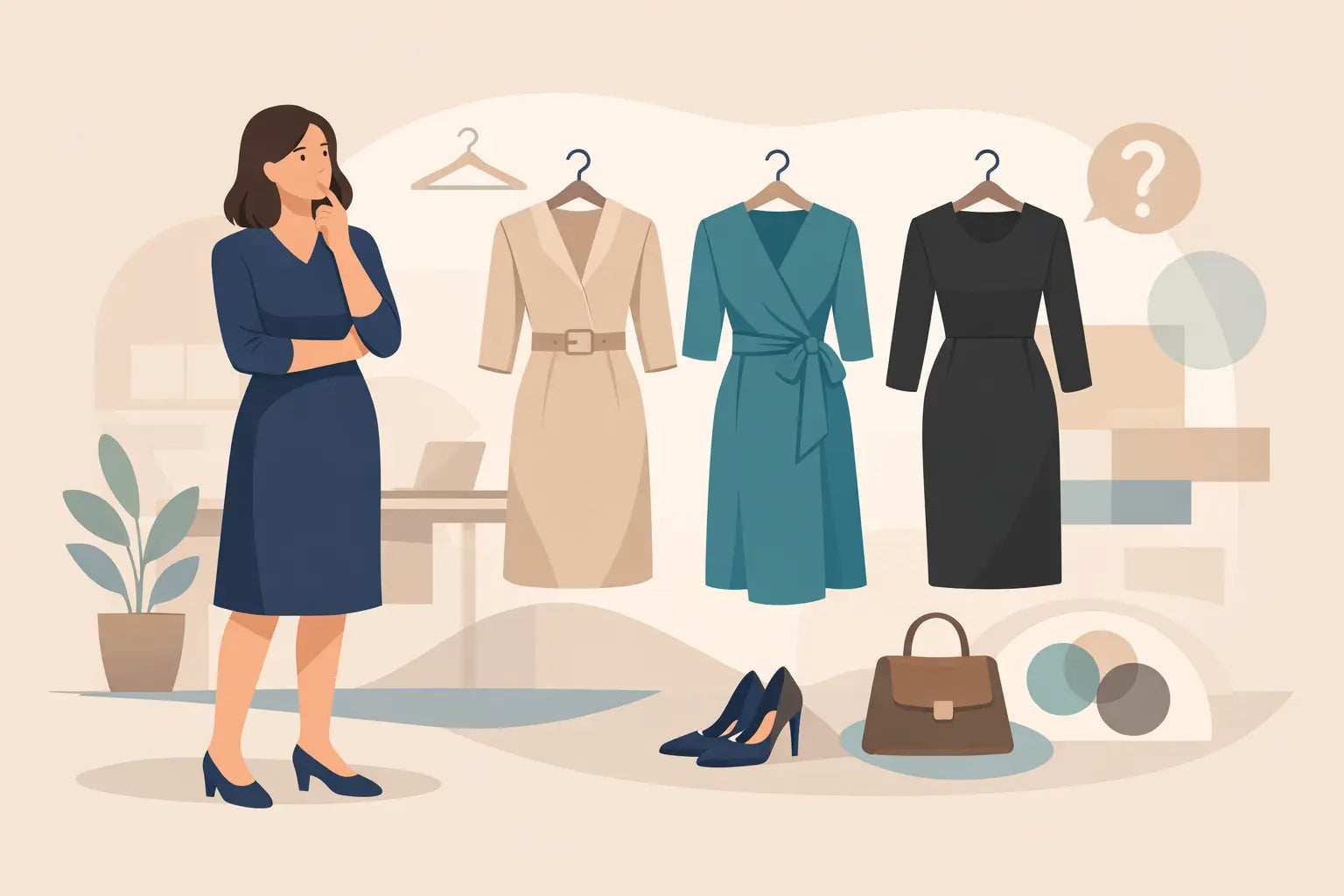
If you are building a smaller, harder-working closet, choose dresses that cover different functions rather than slightly different versions of the same thing. One tailored midi for formal office days, one softer shirt dress for everyday wear, and one seasonless long-sleeve option can go further than several impulse purchases.
This is where consciously designed pieces stand out. Better fabric, cleaner lines, and versatile cuts tend to stay relevant longer. A modern modest dress should not feel like a placeholder until trends change. It should feel wearable now and just as useful next season.
ZAVI approaches this well with modest, modern, minimal dressing rooted in natural fabrics and repeat wear. That balance is what many women are after - fewer pieces, chosen better.
The best choice is the one you will wear often
A modest work dress should make the morning easier. It should let you get dressed quickly, move through the day comfortably, and still feel like yourself. If the fit is right, the fabric breathes, the coverage feels natural, and the styling options are there, you do not need to overthink it.
Choose the dress that works with your real schedule, not just your idealized one. The smartest wardrobe pieces are the ones that quietly keep up.