

How to Choose Linen Weight for Any Season
A linen shirt that feels perfect in July can feel too sheer for work, while a linen blazer that looks polished in the morning can feel too heavy by lunch. That is usually not a style problem. It is a fabric weight problem. If you have ever wondered how to choose linen weight, the answer starts with how you want the piece to look, move, and wear through the day.
Linen is often talked about as if it is one thing. It is not. The weight of the fabric changes almost everything - opacity, drape, structure, breathability, and even how formal a garment feels. Two linen pieces can look similar on a hanger and perform very differently once worn.
For a modern wardrobe, that distinction matters. If you are building around repeat-wear staples, travel pieces, or workwear that has to hold its shape, choosing the right linen weight makes the difference between a garment you reach for constantly and one that stays in the closet.
How to choose linen weight by feel and function
Linen weight is usually measured by GSM, or grams per square meter. Lower GSM means a lighter fabric. Higher GSM means a denser, heavier one. You do not need to memorize every number, but it helps to think in three useful ranges.
Lightweight linen usually sits around 120 to 170 GSM. It feels airy, dries quickly, and works well in high heat. It is ideal for warm-weather shirts, easy dresses, resort wear, and relaxed separates. The trade-off is that it can be more transparent, more prone to wrinkling, and less structured.
Midweight linen generally falls around 170 to 250 GSM. This is often the most versatile option for everyday dressing. It still breathes well, but it has enough body for trousers, button-downs, matching sets, and many dresses. If you want linen that feels easy but not too delicate, this is often the sweet spot.
Heavyweight linen is usually 250 GSM and up. It has presence. It looks more tailored, offers better coverage, and works beautifully in jackets, overshirts, waistcoats, and structured pants. The trade-off is obvious - it is warmer, less fluid, and not always the best choice for peak summer or tropical humidity.
The most practical way to choose is not to ask, "What is the best linen weight?" It is to ask, "What do I need this garment to do?"
Start with the garment, not the fabric
If you are shopping for a shirt, a light to midweight linen usually gives the best balance. A very light shirt feels cool and relaxed, but it may read more casual and can become transparent in pale shades. A midweight shirt holds its shape better, layers more cleanly, and often looks sharper from desk to dinner.
For dresses, it depends on silhouette. A loose summer dress can work beautifully in lightweight linen because movement is part of the appeal. A more refined dress, especially one with a waist seam, collar, or clean column shape, often benefits from midweight linen that skims rather than clings.
For pants, midweight is usually the safer choice. Lightweight linen trousers can feel incredible in heat, but they may crease faster, show pocket lines, and lose shape through the day. A slightly heavier linen brings polish without losing breathability. That matters if you want a pair that can handle commuting, office hours, and evening plans.
For blazers, waistcoats, and structured layers, heavier linen usually performs best. It creates cleaner lines and holds tailoring better. A linen blazer in too light a weight can collapse at the shoulder, wrinkle heavily at the sleeve, and feel less intentional overall.
This is where a capsule mindset helps. The more structured the garment, the more you usually want weight. The more relaxed the garment, the more freedom you have to go lighter.
Drape, structure, and opacity
When shoppers think about linen, they often focus on breathability first. Fair. But the real decision usually comes down to drape and coverage.
Lightweight linen tends to float away from the body. It has softness and ease, especially after washing and wear. That is part of its charm. It works well when you want an undone look - relaxed shirts, pull-on shorts, beach-ready dresses, and soft co-ords.
Midweight linen creates a cleaner silhouette. It still moves, but it has more control. This is often the right choice for elevated basics because it looks considered without feeling stiff. If your style leans minimal, this weight often gives the balance you want.
Heavyweight linen offers shape. It can frame the body rather than simply follow it. That is useful in tailored pieces and modern workwear, where crisp lines matter. It also tends to be less sheer, which can make lighter colors much easier to wear.
Opacity deserves special attention. A white or sand linen piece in a light weight may need layering, lining, or carefully chosen undergarments. The same color in a midweight or heavier weave often feels far more wearable. So if you love clean neutrals, do not evaluate weight in isolation. Evaluate it with color.
Climate matters, but so does your day
It is easy to assume hot weather always calls for the lightest possible linen. Not always.
If you spend most of the day outdoors in dry heat, lightweight linen makes sense. It allows airflow, feels cool against the skin, and dries fast. For vacations and resort wear, that breezy quality is often exactly the point.
But if your day includes air-conditioned offices, commuting, long lunches, and indoor meetings, ultra-light linen may feel less useful. Midweight linen often performs better because it handles temperature shifts more comfortably and maintains a more polished appearance.
Humidity changes things too. In very humid conditions, heavy linen can feel dense. In milder climates or transitional seasons, that same fabric may feel ideal. So when thinking about seasonality, consider your actual routine, not just the forecast.
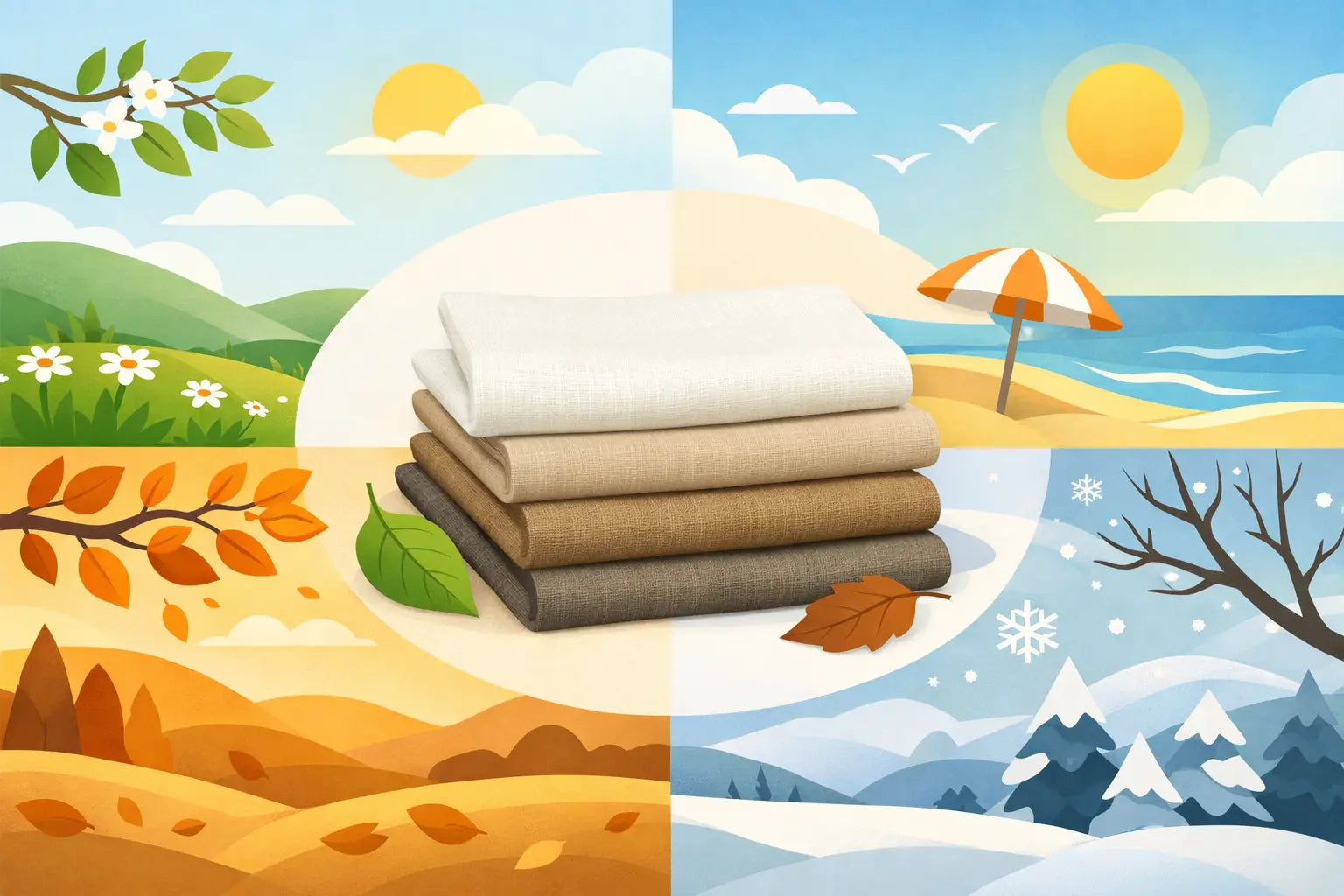
A spring-to-fall wardrobe usually benefits most from a mix: lighter linen for easy tops and dresses, midweight linen for everyday essentials, and heavier linen for outer layers and structured separates.
How to choose linen weight when shopping online
If you cannot touch the fabric, details matter more.
Start with the product description. If GSM is listed, use it. If not, look for language that signals the fabric's behavior. Words like airy, gauzy, featherlight, or semi-sheer usually point to lightweight linen. Terms like structured, substantial, tailored, or opaque suggest a heavier weight.
Then study the garment category. A shirt described as relaxed and breathable is likely lighter than a linen trouser marketed for workwear. Product photography helps too. If the fabric collapses softly, catches movement, or looks slightly translucent in light, it is probably on the lighter side. If seams look crisp and the silhouette holds its form, expect more weight.
Lining is another clue. Brands often line lightweight linen dresses or skirts to improve coverage. That can be a smart design choice, but it also changes the feel of the garment in heat. If breathability is your top priority, a lined lightweight piece may not feel as cool as you expect.
If you shop at www.shop-zavi.com, this is where fabric-first product storytelling becomes useful. When a piece is designed around comfort, repeat wear, and plant-based materials, the intended function of the fabric is usually part of the decision, not an afterthought.
Common mistakes people make
The first mistake is choosing the lightest linen available and expecting it to work for every setting. Lightweight linen is beautiful, but it is not automatically the most versatile.
The second is assuming heavier linen will feel too warm to wear. A well-made midweight or heavy linen piece can still breathe far better than many synthetic alternatives. Weight and comfort are related, but they are not the same thing.
The third is ignoring how linen softens over time. A midweight linen garment may feel slightly crisper at first and become more fluid with wear. That is often a good thing. If you only judge it in its newest state, you may underestimate how versatile it will become.
The fourth is forgetting the role of finish and weave. Two fabrics with similar GSM can still feel different. A looser weave may feel more breathable and casual, while a tighter weave can look cleaner and more refined. Weight matters, but texture matters too.
The best linen weight is usually a range
If you want one answer, here it is: for most wardrobes, midweight linen is the most flexible place to start. It works across more garment categories, offers better coverage, and moves easily between casual and elevated dressing.
But the best wardrobe is rarely built from one fabric weight alone. Lightweight linen earns its place in warm-weather essentials and travel pieces. Heavyweight linen is worth it when you want shape, durability, and a sharper finish.
A good rule is simple. Choose lightweight for softness and heat, midweight for versatility and everyday wear, and heavier linen for structure and polish. That is how linen starts working harder in your wardrobe instead of just looking the part.
The right linen weight should make getting dressed feel easier - cooler when you need relief, sharper when you need presence, and comfortable enough to wear again tomorrow.