
Blazer vs Waistcoat Outfits for Every Day
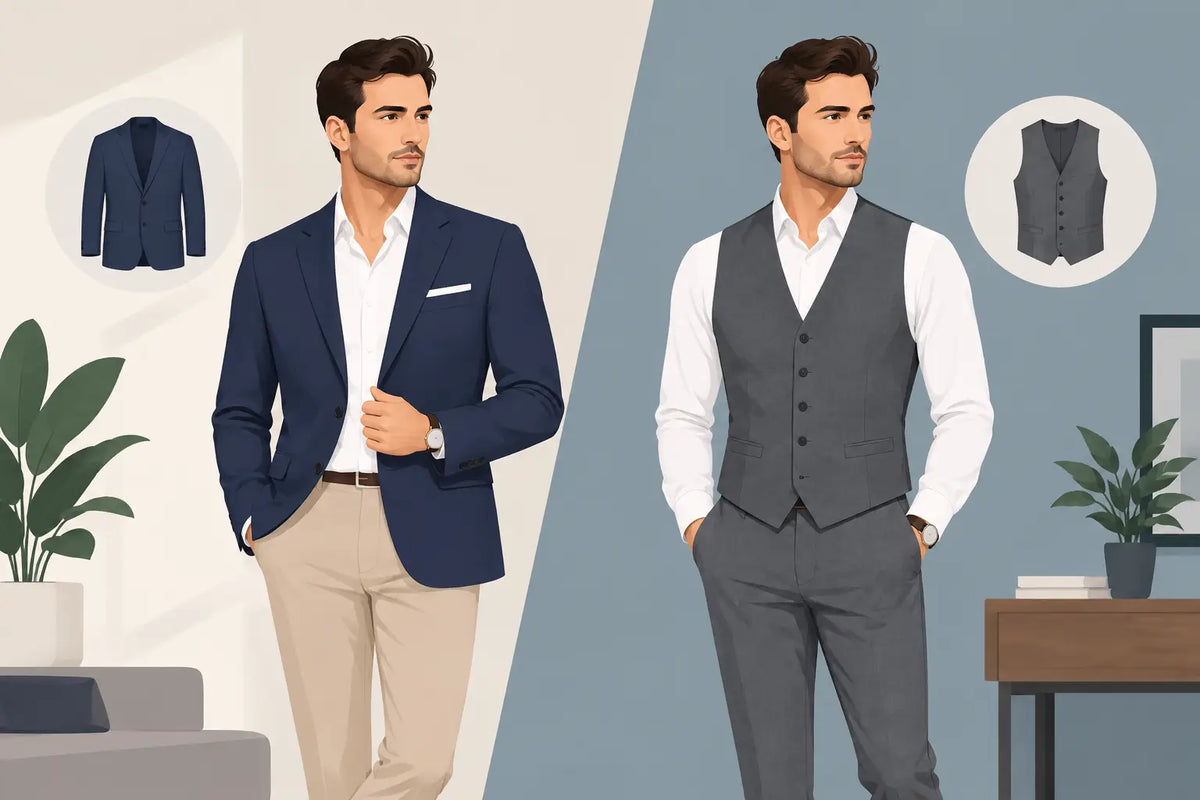
A tailored layer can change the entire direction of an outfit. The choice between blazer vs waistcoat outfits is not simply about formality. It is about proportion, climate, movement, and how much structure you want your day to hold. A blazer brings presence. A waistcoat brings precision. Both earn a place in a considered wardrobe.
For a modern capsule, the best option depends on where you are going and how you want to feel when you arrive. Choose pieces in breathable natural fabrics, keep the palette intentional, and let the silhouette do the work.
Blazer vs Waistcoat Outfits: The Essential Difference
A blazer is the more structured outer layer. Its shoulders, lapels, and longer line create an immediate sense of polish, even over a simple cotton tee or relaxed trousers. It is the piece to reach for when an outfit needs authority, coverage, or a sharper transition from daytime plans to an evening reservation.
A waistcoat is lighter, closer to the body, and often more directional. It defines the waist without adding sleeves or bulk, making it especially useful in warm weather and for layering under a jacket. Worn as a top, it can feel sleek and self-assured. Worn as part of a matching set, it creates a clean, elongated line with very little effort.
Neither is inherently more versatile. A blazer may work harder in offices with a formal dress code, while a waistcoat can feel more wearable for creative workplaces, travel, and warm-city dressing. The right choice is the one that suits your real routine, not just a single occasion.
When to Choose a Blazer
Choose a blazer when you want your outfit to hold its shape. It gives wide-leg pants, denim, and fluid dresses a clear frame, which is useful when the base of your outfit is soft or relaxed. A well-cut blazer also offers practical coverage for air-conditioned offices, evening events, and unpredictable temperatures.
For work, pair a neutral blazer with a crisp shirt and straight-leg pants in a similar tone. Matching colors create a suit-like effect without looking overly corporate, especially in linen or cotton blends. A black, stone, navy, or deep olive blazer offers repeat wear because it can anchor both tonal outfits and stronger seasonal colors.
For off-duty plans, reduce the formality through contrast. Layer an oversized blazer over a fitted tank, long skirt, or straight-leg jeans. The tension between tailored and casual pieces keeps the look current. Clean sneakers, flat leather sandals, or a minimal loafer can take the outfit in different directions without changing its foundation.
Fabric matters here. A heavy synthetic blazer can look polished but feel restrictive after an hour in warm weather. Linen and cotton-forward options offer a softer drape and more breathability, though they will crease more easily. That lived-in texture is often part of the appeal. If your schedule includes travel or long days, choose a slightly relaxed fit so the blazer can layer comfortably without pulling across the shoulders.
Blazer proportions that feel current
The most useful blazer length usually falls below the hip. It balances wide trousers and gives shorter skirts or dresses a more grounded finish. If you are petite or prefer a cleaner line, a single-breasted blazer with restrained padding prevents the piece from overwhelming the frame.
Pay attention to the sleeve. A full-length sleeve looks more formal, while a pushed-up or bracelet-length sleeve reveals the wrist and makes the outfit feel lighter. This small adjustment is particularly effective in warmer climates, where a blazer should look intentional rather than overly layered.
When to Choose a Waistcoat
Choose a waistcoat when you want tailoring without the extra layer. It offers definition, especially when paired with high-rise pants or a matching skirt, yet it leaves the arms free and the overall silhouette open. This makes it a natural choice for resort dressing, summer workwear, and long lunches that turn into evening plans.
A tailored waistcoat and coordinating pants can replace a traditional suit in settings where you want to look refined but not heavily dressed. In a neutral palette, the effect is minimal and assured. Add a lightweight shirt underneath for more coverage, or wear the waistcoat buttoned on its own for a sharper, more contemporary finish.
The key is fit. A waistcoat should sit close enough to define the body without gaping at the buttons or pulling across the chest. The hem should meet the waistband of your pants or skirt, or overlap it slightly. A gap can work for a relaxed look, but it can also interrupt the clean vertical line that makes waistcoat outfits so effective.
For modest styling, layer a waistcoat over a fitted long-sleeve top, a fine knit, or a crisp poplin shirt. Keep the base layer streamlined so the waistcoat remains the focus. For a more relaxed look, wear it open over a ribbed tank with loose linen pants. The result is easy, breathable, and polished enough for everyday plans.
Waistcoat proportions that look intentional
High-rise bottoms are the waistcoat's strongest partner. They lengthen the leg, minimize bulk at the waist, and allow the piece to read as a complete top rather than an accessory. A wider-leg trouser creates a fluid, fashion-forward silhouette, while a straight leg feels more classic and work-ready.
If your waistcoat is cropped, balance it with volume below or a longer overshirt worn open. If it is longer and more relaxed, keep the pants clean through the hip. The aim is not perfect symmetry. It is visual ease.
How to Build Blazer and Waistcoat Looks From One Palette
A focused color palette makes both pieces easier to wear repeatedly. Start with one or two grounding shades such as ivory, black, sand, chocolate, navy, or soft gray. Then add one accent color that works with your skin tone and existing wardrobe. This could be muted blue, terracotta, sage, or deep burgundy.
Monochrome is especially effective with tailoring. A sand waistcoat with matching trousers and a white shirt feels fresh in daylight. A black blazer layered over black pants and a fine knit feels direct and elevated for evening. The colors do not need to match exactly. Slight variation in tone can add depth while preserving the streamlined effect.
Texture also creates interest without relying on prints. Pair a linen blazer with a smooth cotton tank, or combine a structured waistcoat with soft, wide-leg trousers. Natural fabrics have a visual honesty that suits minimal styling. They also make tailored pieces feel less rigid and more suited to repeat wear.
Styling for Work, Travel, and Evenings
For work, choose the layer that matches the level of formality around you. A blazer is the safer choice for presentations, client meetings, and offices with established dress expectations. A waistcoat set works beautifully in design-led, flexible, or warm-weather workplaces. Keep accessories restrained and let the tailoring carry the outfit.
For travel, a waistcoat can be the more practical option because it provides structure without taking up much space or trapping heat. Wear it with comfortable pants and a lightweight overshirt that can be removed easily. If you prefer a blazer, select an unlined or softly constructed style and use it as your outermost layer rather than trying to pack multiple jackets.
For evenings, both pieces become stronger with a simpler base. A blazer over a column dress, slip skirt, or fitted top feels composed without feeling overdone. A waistcoat with matching pants and a few undone buttons can feel equally polished, especially with a defined belt, sculptural earrings, or a sleek shoe.
Buy With Repeat Wear in Mind
The most sustainable tailored piece is the one you continue reaching for. Before choosing between a blazer and waistcoat, consider what you already own. If your wardrobe is full of tanks, tees, dresses, and denim, a blazer may create more new combinations. If you already rely on button-downs and tailored pants, a waistcoat may bring a fresher shape to familiar outfits.
Look beyond the first styling idea. Can the blazer work with a dress, trousers, and denim? Can the waistcoat be worn alone, over a shirt, and under a jacket? Pieces with three or more clear uses are more likely to become true wardrobe staples.
ZAVI approaches tailoring as an everyday proposition: consciously designed pieces that balance clean structure with the comfort of plant-based and natural fabrics. That balance matters. The best outfit should look considered, but it should also let you move through the day with ease.
Choose the blazer when you want a confident outer layer. Choose the waistcoat when you want tailored definition with less weight. Build around the one you will wear next week, next season, and long after the occasion that first made you want it.