
Blazer vs Jacket for Office: The Right Layer
The blazer vs jacket for office question is less about strict rules and more about the impression you want your outfit to make. One layer can bring clean structure to trousers and a knit; another can make a formal look feel more relaxed. The right choice should work with your office culture, commute, climate, and the rest of your wardrobe.
For a considered workwear wardrobe, start with the distinction that actually matters: a blazer is designed to look intentional indoors, while a jacket often has a more practical, casual, or outerwear-led purpose. Both have a place. Knowing when to reach for each keeps getting dressed simple.
Blazer vs Jacket for Office Wear: The Core Difference
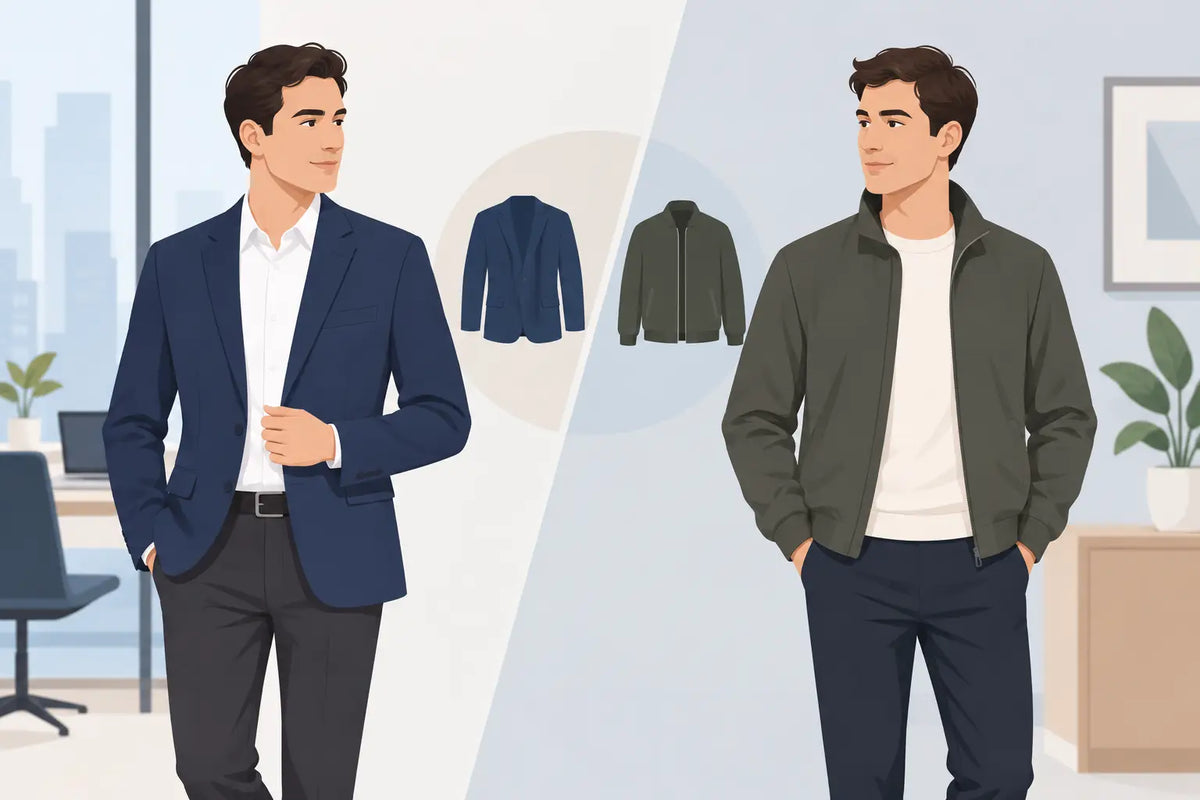
A blazer is a tailored separate. It typically has a defined shoulder, lapels, a button-front closure, and a shape that creates a polished line through the body. Unlike a suit jacket, it is not necessarily made to match a pair of trousers. That makes it one of the most flexible pieces in a modern professional wardrobe.
A jacket is a broader category. It can mean a denim jacket, chore jacket, bomber, utility jacket, shirt jacket, or lightweight zip-front layer. Some jackets are suitable for the office, but their construction usually feels less formal than a blazer. They may have patch pockets, a looser fit, a collar without lapels, or hardware that reads more casual.
The distinction becomes clear in the room. A blazer is often the strongest option for presentations, client meetings, interviews, and offices with a smart or business-casual dress code. A jacket is often better for creative workplaces, relaxed Fridays, travel days, or offices where personal style is encouraged over traditional tailoring.
Neither is automatically better. A sharply cut blazer can feel too formal in a laid-back studio, while a refined linen shirt jacket can look exactly right in a warm-weather office. The goal is proportion, fabric, and finish.
When a Blazer Is the Better Office Choice
Choose a blazer when you want your outfit to look composed with minimal effort. Its structure does much of the work, even when the pieces underneath are simple. A white cotton shirt, straight-leg trousers, and loafers become more polished with a blazer in black, navy, stone, or soft brown.
A blazer also creates useful contrast with relaxed pieces. Try one over a fine-gauge knit and wide-leg pants, or pair it with a column dress and low heels. The tailored shoulder keeps softer fabrics and fluid silhouettes from looking overly casual.
For formal meetings and visible days
If you are leading a meeting, meeting a new client, speaking on a panel, or attending an office event, a blazer offers a clear visual signal: you are prepared. It does not need to be stiff to do this. Unlined or lightly lined linen and cotton styles provide the same refined effect with more ease and breathability.
For conservative offices, choose a single-breasted blazer in a solid, neutral shade. Keep the fit close enough at the shoulders to look precise, with room through the body to layer a shirt or lightweight knit. A blazer that pulls at the button or restricts your arms will never look as polished as one with an easy, confident fit.
For a capsule work wardrobe
Blazers earn their place because they repeat well. One well-made style can work across several outfits: with matching trousers for a coordinated set, with denim on a casual day, or over a midi dress for an after-work plan. This is the kind of versatility that makes a smaller wardrobe feel more complete.
Look for plant-based fabrics that suit your daily conditions. Linen brings texture and airflow, making it especially useful in warmer climates. Cotton offers a clean, dependable finish and can feel substantial without being heavy. Natural fabrics may wrinkle more than synthetic blends, particularly linen. That lived-in texture is part of their character, but it is worth considering if your office expects a very crisp appearance all day.
When an Office Jacket Makes More Sense
A jacket is the right choice when the dress code is relaxed or your day requires more movement. A refined shirt jacket, for example, can layer easily over a tee, knit top, or button-down without the formality of lapels and tailoring. It feels modern, practical, and still pulled together.
The key is to avoid confusing casual with careless. A faded denim jacket, sporty bomber, or oversized utility layer may be perfect off duty, but it can undermine an otherwise professional outfit in a client-facing setting. Choose jackets with clean lines, minimal branding, and elevated fabrics when you plan to wear them to work.
For creative, hybrid, and casual offices
In workplaces where sneakers, denim, and knitwear are normal, a jacket can feel more current than a traditional blazer. Pair a structured overshirt with tailored pants rather than distressed jeans. Wear a neat cotton jacket over a monochrome outfit to maintain a streamlined silhouette. The combination still looks intentional, but it does not feel overdressed.
A lightweight jacket is also useful for commutes and offices with unpredictable air conditioning. It can function as an indoor layer when the room is cool, then become an easy outer layer when you leave. This is where a slightly relaxed fit is helpful, provided the shoulders still sit neatly and the length complements your trousers or skirt.
For warm weather and travel
Warm climates call for layers that breathe. Heavy synthetic lining and dense tailoring can look elegant for the first hour, then feel restrictive by midday. A linen blazer remains the smarter choice for formal moments, but a cotton or linen shirt jacket can be a practical alternative for a casual office day.
Choose lighter colors such as ecru, sand, olive, soft gray, or pale blue to keep the look fresh. They pair easily with white, black, navy, and natural-toned separates, which means fewer decisions when packing for a work trip. A layer that can move from airport to meeting to dinner is a better investment than one reserved for a single occasion.
How to Choose the Right Silhouette
Fit matters more than labels. A blazer should sit cleanly at the shoulder and allow comfortable movement when you reach forward or sit at a desk. The sleeve should not swallow your hands, and the hem should balance your proportions. A slightly longer blazer can look elegant with slim trousers or a straight dress; a shorter cut can work well with high-waisted, wide-leg pants.
For jackets, pay close attention to volume. If the jacket is boxy or oversized, keep the rest of the outfit more streamlined. If it is cropped, pair it with a higher rise below. These small adjustments prevent a casual layer from disrupting the clean, minimal look that makes workwear feel elevated.
Color plays a role, too. Black and navy are dependable, but they are not the only professional options. Chocolate, taupe, charcoal, cream, and olive can be equally versatile while adding depth to a neutral wardrobe. For the most mileage, select a shade that works with at least three bottoms you already wear regularly.
Styling a Blazer or Jacket Without Overthinking It
A blazer needs only simple foundations: a crisp shirt and trousers, a fitted knit with tailored pants, or a modest dress in a fluid fabric. Let the shape of the blazer define the outfit. Clean shoes and a structured bag complete the look without competing for attention.
A jacket benefits from one tailored element. Wear it with pleated trousers, a polished skirt, or a matching set rather than pairing every piece with something relaxed. This balance keeps the outfit appropriate for an office while preserving its ease.
For day-to-night wear, remove the layer after work or change one element beneath it. A blazer over a sleeveless top and relaxed trousers can move easily into dinner plans. A refined jacket over a tonal set feels equally considered with flats during the day and heeled sandals later.
Build Around What You Will Repeat
The best office layer is not the one that looks most formal on a hanger. It is the one you reach for on a busy morning because it feels comfortable, works with your existing pieces, and makes you stand a little taller. At ZAVI, consciously designed linen and cotton workwear supports that kind of repeat wear - modern, minimal, and ready for the rhythm of a full day.
Choose a blazer when you need tailoring to carry the look. Choose a jacket when the setting allows more ease. Then let fabric, fit, and how often you will wear it make the final decision.