
Minimalist Blazer Quality Review: What Matters
A blazer earns its place in a minimal wardrobe by doing more than looking polished on a hanger. It needs to hold its shape through a full workday, layer easily over a tee or shirt, and feel considered without feeling restrictive. This minimalist blazer quality review focuses on the details that separate a frequent-wear essential from a piece that only photographs well.
The best version is not always the most structured, heaviest, or most expensive. It is the blazer that suits your climate, your routine, and the rest of your wardrobe. For warm-weather dressing, breathability may matter more than a fully built shoulder. For a formal office, sharper tailoring and a smoother lining may be worth the added structure.
A Minimalist Blazer Quality Review Starts With Fabric
Fabric sets the tone, comfort, and lifespan of a blazer. Before looking at buttons or pockets, look at the fiber content and how the cloth behaves in your hand. A quality fabric should feel intentional: substantial enough to drape cleanly, yet appropriate for the season and silhouette.
Linen is a natural choice for warm climates and travel. It is breathable, distinctive, and relaxed in a way that makes tailoring feel less formal. Its trade-off is visible wrinkling. That is not a flaw to eliminate, but a characteristic to accept when choosing linen. A well-cut linen blazer should wrinkle softly rather than collapse, maintaining enough body through the lapel and front panels to look composed.
Cotton brings a cleaner, more familiar structure. Depending on the weave, it can feel crisp and tailored or soft and casual. A cotton blazer with a little density often works well as an everyday layer because it wears easily with denim, tailored trousers, and matching bottoms. It can also be easier to maintain than linen, though it may feel warmer in high heat.
Blends require a closer look rather than an automatic no. A small amount of a supporting fiber can help with recovery, shape retention, or a smoother finish. The question is whether the blend improves the garment's purpose. If a blazer is marketed for summer but feels overly synthetic, warm, or stiff, the fabric is working against the design.
Do not confuse thickness with quality. A dense blazer can look premium but become impractical if it is too hot or bulky for your life. Quality is better measured by balance: the fabric should hang without pulling, recover after movement, and complement the intended level of structure.
Look at the Shape Before the Details
Minimal design makes proportion highly visible. There are fewer decorative elements to distract from an awkward shoulder, a short sleeve, or a front that pulls when buttoned. Start with the shoulders. The seam should end close to your natural shoulder point, unless the style is deliberately oversized. Too narrow and the blazer will restrict movement; too wide and even a polished outfit can look untidy.
A good lapel lies flat against the chest rather than lifting or rolling away. Check the break line, where the lapel folds toward the button. It should look smooth when standing, sitting, and moving your arms. On single-breasted styles, the front should close without horizontal tension lines. If it pulls at the button, sizing up may solve the issue, but it can also signal that the cut does not suit your proportions.
Length changes the entire role of a blazer. A hip-length cut is versatile and easy with dresses or high-rise trousers. A longer, relaxed blazer creates a more directional silhouette and layers well over matching sets. Neither is inherently better. The right choice depends on whether you want definition at the waist or an elongated, effortless line.
Sleeve construction deserves equal attention. The sleeve should allow you to reach, drive, and type without the whole jacket lifting sharply across the back. A slight ease is valuable in an everyday blazer. Minimalism should feel free, not precious.
Tailoring Is Seen in the Quiet Details
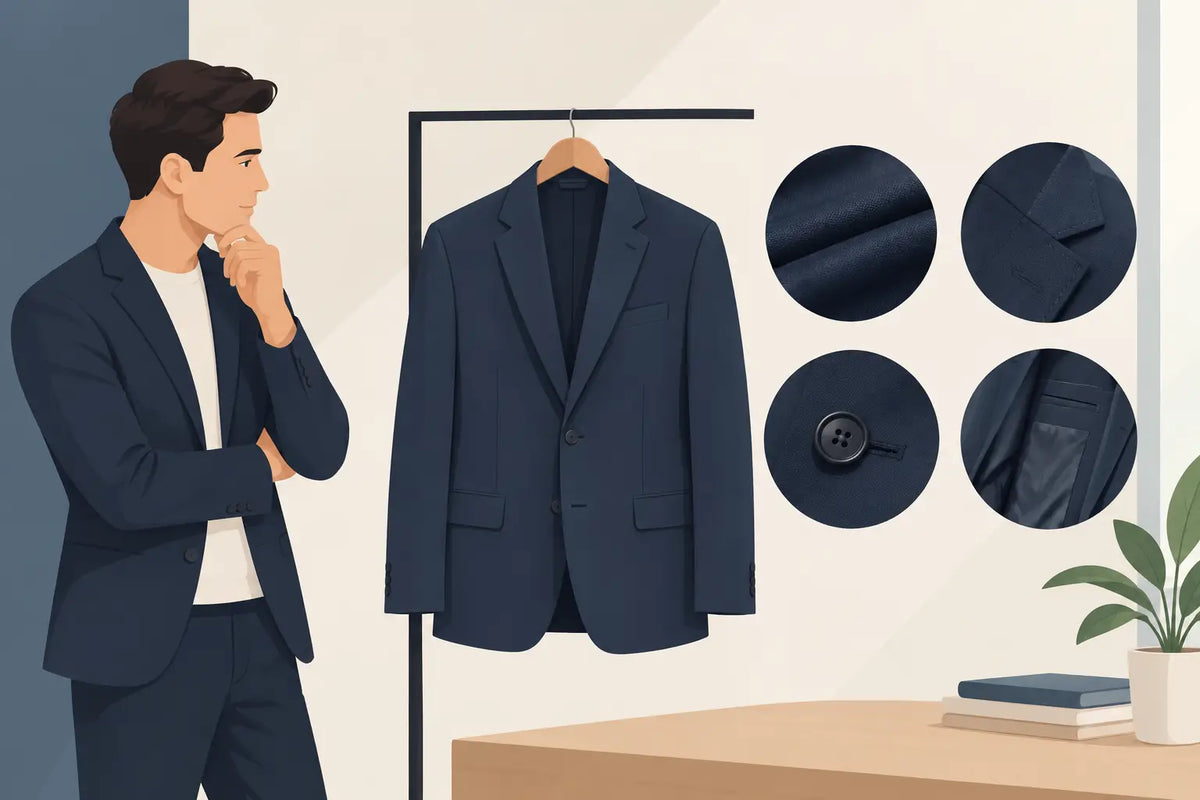
A clean exterior depends on work happening beneath the surface. Tailoring can range from softly unstructured to fully built, and each approach has a place. An unlined or partially lined blazer feels lighter and more breathable, particularly in linen and cotton. It also reveals more of the garment's inner finishing, so the seams should look neat and secure.
A fully lined blazer provides a smoother glide over shirts and knitwear. It can help the outer fabric retain a crisp line, especially in a more formal cut. The compromise is warmth. If you live in a hot climate or primarily wear short sleeves beneath your blazer, an unlined or lightly lined style may deliver more value through actual use.
Check the collar at the back of the neck. It should sit close to the body without a gap. Examine the pocket placement as well. Welt pockets should be level, and flap pockets should rest flat rather than twisting outward. These details may appear small, but they determine whether a simple blazer reads refined or rushed.
Button quality is another useful indicator. Buttons should feel firmly attached, align neatly, and support the garment's overall finish. Natural-look buttons, covered buttons, or clean matte finishes often complement a minimalist design better than overly shiny hardware. More important than the material is the execution: a button that wobbles or pulls at the fabric diminishes an otherwise thoughtful piece.
Inside Finishing Tells You How It May Wear
Turn the blazer inside out before making a decision. Look for even seam allowances, tidy overlocking or binding, and no loose threads around stress points. The armholes, side seams, pocket openings, and button areas deserve the closest inspection because they handle repeated movement.
A high-quality blazer does not need elaborate internal decoration. It needs durable construction where it counts. Reinforcement around buttons, a stable back vent, and properly finished hems are stronger signs of longevity than a branded lining alone.
Also consider how the garment is designed to be cared for. A blazer that requires occasional professional cleaning may be appropriate for structured workwear. For frequent, warm-weather use, a fabric with manageable home care can make it easier to wear often. Always follow the care label, especially with linen, which benefits from gentle treatment and proper reshaping after washing.
Fit Testing Makes the Review Personal
The most useful quality test happens on your body, not in product photography. Put the blazer on over the layers you normally wear. Stand naturally, sit down, cross your arms, and place your hands in your pockets. Notice whether the lapels stay in place and whether the back feels tight.
Then style it three ways. Try it with trousers for work, denim for an off-duty plan, and a dress or matching set for an elevated evening look. If the blazer adds polish without making each outfit feel overly formal, it is doing the work of a true wardrobe essential.
Color should support the same versatility. Black, ivory, navy, stone, chocolate, and soft gray tend to create the longest styling life, but the best neutral is the one that already appears in your closet. A warm beige blazer may be more useful than black if your wardrobe is built around cream, olive, and natural linen. Minimal does not mean limited to one palette.
Cost Per Wear Is the Better Measure
A lower price is not always better value if the fabric loses shape, the lining tears, or the cut only works for one occasion. Equally, a premium price is not proof of quality. Consider how many months of the year you can wear the blazer, how many outfits it completes, and whether it still feels right after several hours.
ZAVI approaches this category through consciously designed, natural-fabric pieces that prioritize repeat wear. That perspective matters because a blazer should not live only in a workwear rotation. It should move easily between meetings, dinners, flights, and slower weekend plans.
Choose the blazer that makes getting dressed simpler. The right one will have a fabric you want against your skin, tailoring that gives you room to move, and a shape that keeps returning to your outfit decisions. Wear it often, care for it well, and let its quiet details do the talking.