

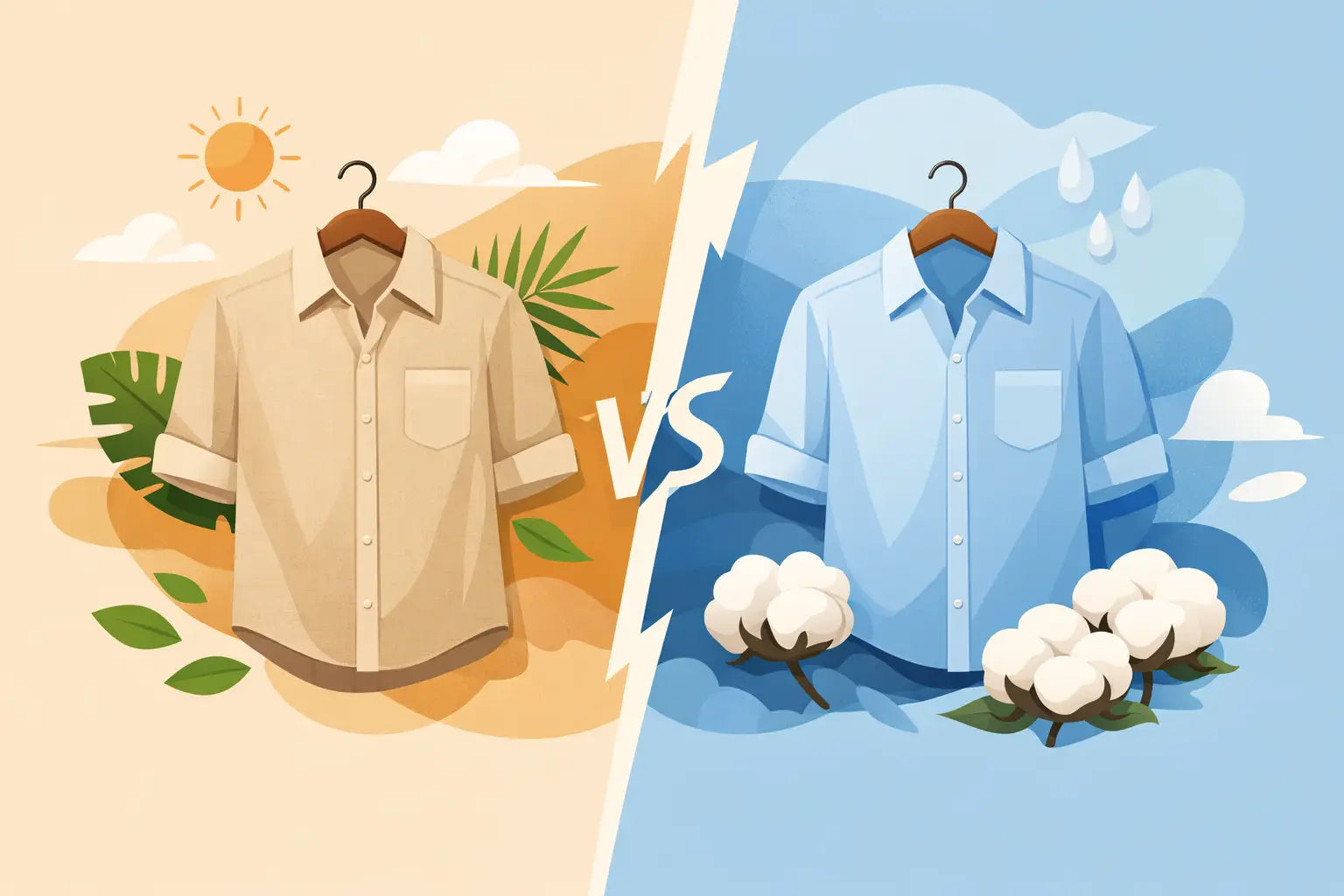
Linen Shirts vs Cotton Shirts: Which Wins?
Choosing between linen shirts vs cotton shirts usually happens in front of a mirror, five minutes before leaving. One fabric looks crisp but feels warm by noon. The other feels airy but creases by the time coffee is poured. If you build a wardrobe around ease, repeat wear, and natural fabrics, the difference matters.
This is not really a question of better or worse. It is a question of what your day asks from your shirt. Heat, movement, dress code, texture, and care all play a role. Linen and cotton can both earn a place in a modern wardrobe, but they perform differently, and that difference shows up fast.
Linen shirts vs cotton shirts: the real difference
Linen is made from flax. Cotton comes from cotton plant fibers. Both are natural, breathable, and comfortable next to skin, but they do not behave the same once cut into a shirt.
Linen has a drier, cooler hand feel. It lets air move easily and tends to sit slightly away from the body, which is part of why it feels so good in warm weather. Cotton is usually softer from the start and often feels smoother and more familiar, especially if you wear shirts year-round and want something easy to dress up or down.
The visual difference matters too. Linen has natural texture. It looks relaxed even when tailored cleanly. Cotton reads neater and more structured, especially in poplin, twill, or sateen weaves. If your wardrobe leans minimal, this is where the choice becomes style, not just comfort.
When linen shirts make more sense
On hot days, linen is hard to beat. It breathes well, releases heat quickly, and absorbs moisture without feeling heavy. If you live in a warm climate, commute on foot, travel often, or simply run warm, linen tends to feel more comfortable for longer.
Linen also has a quiet sophistication that works well in modern wardrobes. The texture gives simple silhouettes more depth. A linen shirt with tailored trousers, wide-leg pants, or relaxed shorts looks considered without trying too hard. It is especially strong for resort wear, summer workwear, and off-duty dressing where polish should still feel easy.
There is a trade-off, and it is obvious. Linen wrinkles. Not a little - noticeably. For some people, that is part of the appeal. The lived-in finish feels natural, soft, and unforced. For others, especially in formal office settings, it can read too relaxed by mid-afternoon.
Linen also softens over time. A good linen shirt often gets better with wear, not worse. That makes it appealing if you prefer fewer pieces worn often and want fabric that develops character instead of staying static.
Best uses for linen shirts
Linen works especially well for summer offices, vacation packing, weekend dressing, and warm-weather layering. It is also a smart choice for matching sets and relaxed tailoring because the fabric brings movement and dimension to clean cuts.
If your style is modest, modern, and minimal, linen gives you that effortless line without looking flat. It holds shape, but never too rigidly.
When cotton shirts are the better buy
Cotton wins on familiarity and range. It can be soft, crisp, substantial, light, smooth, or brushed depending on the weave and finish. That flexibility is why cotton shirts fit into almost every category of dressing, from sharp workwear to everyday basics.
If you want a shirt that looks polished for longer, cotton is often the safer option. It generally wrinkles less than linen and can feel easier to maintain, especially if your mornings are fast and your standards for neatness are high. A cotton button-down under a blazer, for example, usually keeps a cleaner line through the day.
Cotton is also often softer at first touch. For people with sensitive skin or anyone who prioritizes that broken-in comfort from day one, cotton can feel more approachable. In cooler months, it tends to offer a bit more insulation too, which makes it more versatile across seasons.
Still, not all cotton shirts perform equally well in heat. A lightweight cotton poplin can feel crisp and breathable. A heavier cotton oxford may feel too warm in peak summer. That is why fabric weight matters just as much as fiber.
Best uses for cotton shirts
Cotton shirts are ideal for structured workwear, all-season wardrobes, layering under knitwear or tailoring, and days when you want a more refined finish. They also work well if your routine favors low-fuss dressing and easy care.
For capsule wardrobes, cotton offers reliability. It can carry more formal moments without asking you to compromise on comfort.
Breathability, softness, and structure
If breathability is the priority, linen usually leads. It is naturally airy and excels in humid or very warm conditions. Cotton still breathes well, especially in lighter weaves, but it does not always feel as cooling when temperatures climb.
If softness is the priority, cotton usually has the edge at the start. It feels smoother and less textured. Linen can feel slightly crisp at first, though quality linen softens beautifully with wear and washing.
If structure is the priority, cotton tends to offer more control. It can hold a sharper silhouette, which suits formal shirts and cleaner office styling. Linen has structure too, but it is a more relaxed kind. It bends toward ease, not stiffness.
This is where personal style matters. Some wardrobes need crispness. Others need movement. Both can look elevated, but they speak differently.
Care and longevity: what to expect
Linen and cotton are both durable natural fibers, but they age in different ways. Linen is strong and often becomes softer over time while keeping its distinct texture. Cotton is resilient too, though repeated washing can gradually thin lower-quality fabric faster than you might expect.
In care terms, cotton is generally simpler. It is often easier to wash, easier to press, and easier to wear straight from the hanger. Linen asks for a bit more acceptance. You can steam it, press it lightly, or wear the wrinkles as part of the look. The right choice depends on whether you want control or ease.
For frequent travelers, this becomes practical fast. Cotton may come out of a suitcase looking more presentable. Linen may arrive creased, but it still looks right in relaxed settings, coastal destinations, and heat-heavy cities where comfort matters more than perfect flatness.
Linen shirts vs cotton shirts for work, travel, and everyday wear
For work, cotton usually fits more offices. It reads sharper, layers cleanly, and feels dependable. Linen can work beautifully too, especially in creative workplaces or warm climates, but it helps to choose cleaner cuts and refined styling.
For travel, it depends on destination. Linen is better for heat, beach cities, and summer itineraries where breathability matters most. Cotton is better when you need one shirt to do more across climates, occasions, or long transit days.
For everyday wear, the answer comes down to your wardrobe rhythm. If you prefer lived-in texture and warm-weather ease, linen will probably see more use. If you want a more polished default that transitions across seasons, cotton may earn more wear.
Many modern wardrobes need both. A linen shirt for high summer, weekends, and resort dressing. A cotton shirt for structured workdays, layering, and year-round reliability. That is often the smartest answer, especially if you buy with intention and wear on repeat.
Which fabric is more sustainable?
This question depends on sourcing, farming practices, dyes, finishes, and how long you keep the garment. Both linen and cotton are plant-based fibers, but not all versions are created equally.
Linen is often seen as a lower-impact option because flax can require fewer inputs than conventional cotton, though standards vary widely by maker. Cotton can also be a responsible choice when sourced thoughtfully and designed for longevity. The bigger point is this: natural fabric is only part of the equation. Better design, better quality, and more wears matter too.
That is why consciously designed pieces in natural fabrics tend to hold their place in a wardrobe. They are easier to style, easier to repeat, and less likely to feel disposable.
So which should you choose?
Choose linen if you want cool comfort, visible texture, and an easy drape that works hard in warm weather. Choose cotton if you want softness, polish, and all-season versatility with slightly less maintenance.
And if your wardrobe needs to move between city days, office hours, weekends, and travel, do not force one fabric to do everything. The better approach is balance. A shirt should match the pace of your day, the climate you live in, and the way you actually like to get dressed.
The best piece is not the one that wins on paper. It is the one you reach for again without thinking.