


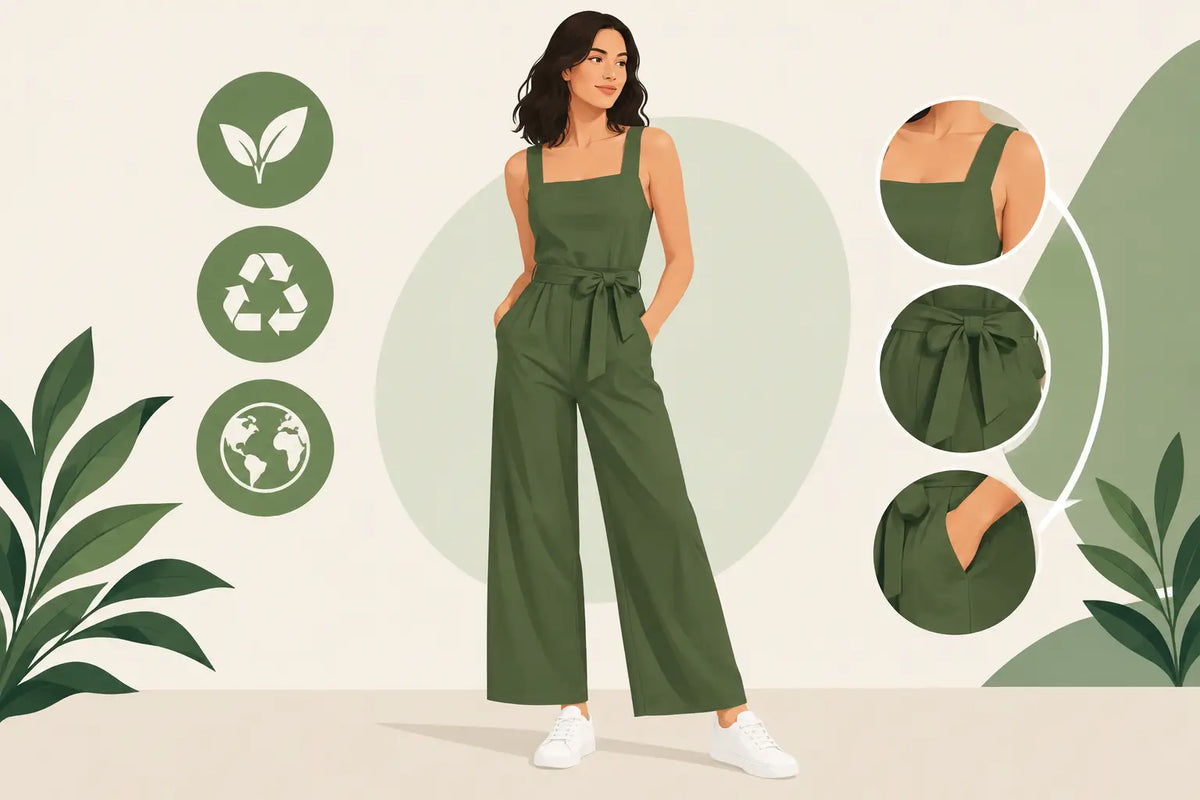
Sustainable Jumpsuit Fit Review That Works
A jumpsuit can look perfectly tailored on a hanger and feel completely wrong by noon. The reason is simple: one garment has to accommodate your shoulders, torso, waist, hips, and stride at once. This sustainable jumpsuit fit review focuses on the details that make a natural-fabric one-piece feel polished, breathable, and genuinely easy to wear.
For a capsule wardrobe, the right jumpsuit earns its place quickly. It creates a complete look in one decision, moves from a morning meeting to dinner plans with a change of shoes, and makes packing lighter. But versatility only matters when the fit lets you sit, reach, walk, and breathe without constant adjustment.
A Sustainable Jumpsuit Fit Review Starts With Proportion
Ignore the temptation to choose a jumpsuit by your usual size alone. Size labels are a useful starting point, but jumpsuits are governed by proportion. A fit that works at the waist may pull at the shoulders. A relaxed leg can still feel restrictive if the rise is too short.
Start with the garment measurements when they are available, then compare them with a jumpsuit or pair of trousers you already love. The most helpful measurements are the bust, waist, hip, inseam, and total length. For a one-piece, however, torso length is the measurement that often decides everything.
A longer torso may need extra room through the body, even when the bust and hips align with a smaller size. A shorter torso may find that excess fabric gathers at the midsection or drops the waist too low. Adjustable straps, a button-front opening, a defined waistband, or a gently elasticized back can provide welcome flexibility.
Check the shoulder-to-crotch distance
The easiest at-home fit test is also the most revealing. Put the jumpsuit on, raise both arms, then sit down. If the garment pulls across the shoulders, rises uncomfortably at the crotch, or makes you feel held in place, the body length is too short for you.
A little ease is essential. A jumpsuit should follow your shape rather than demand that you stand perfectly still. This matters even more in linen and cotton, which are breathable and comfortable but do not have the recovery of high-stretch synthetic blends.
If you are between sizes, sizing up can be the smarter choice when the tension is happening through the torso. The waist can often be refined with a belt or tailored, while additional body length is much harder to create after purchase.
The Fit Points That Define a Polished Jumpsuit
A great jumpsuit is not necessarily tight, oversized, or sharply structured. It is balanced. Each area should create enough room for movement while keeping the overall silhouette intentional.
Waist placement changes the whole silhouette
Look for a waist seam, drawstring, belt, or elastic section that sits where your body naturally narrows. A higher waist can lengthen the leg line and create a refined shape, particularly with a wide-leg cut. A lower, relaxed waist has an effortless feel, but it may add volume through the middle on some frames.
For workwear, a clean waistband with a subtle belt often gives the most adaptable finish. It looks considered under a blazer and can be relaxed after hours with flat sandals or sneakers. For travel and weekends, a softer drawstring waist offers comfort without losing structure.
The rise should allow movement, not sag
The rise is easy to overlook because it is not always listed in product details. Yet it determines whether a jumpsuit feels elegant or awkward. Too short, and the garment pulls when you sit. Too long, and it can create unwanted fullness below the waist.
Aim for a rise that gives you room to walk and sit while still keeping the fabric smooth. A slightly relaxed fit is often preferable to a close fit here, especially in woven fabrics. The goal is comfort that remains invisible.
Hip and leg shape should match your day
Straight-leg jumpsuits offer a clean, streamlined look and work well with loafers, low heels, and minimal sneakers. Wide-leg styles bring movement and airiness, making them especially appealing for warm climates and resort dressing. Tapered legs can feel modern and tailored, but they need enough room at the hip and thigh to avoid pulling.
Think about how you will actually wear the piece. If your day includes commuting, desk work, or long lunches, check that the hip area does not strain when seated. If you plan to travel in it, a looser leg and softer waist may serve you better than a sharply fitted silhouette.
Fabric Is Part of the Fit
A sustainable jumpsuit fit review is incomplete without fabric. Material affects drape, breathability, structure, and how a garment changes after several hours of wear. Natural and plant-based fabrics can feel exceptional against the skin, but each behaves differently.
Linen has a dry, airy hand and a relaxed drape. It is a natural choice for heat, vacations, and everyday dressing, especially in a wider-leg or utility-inspired jumpsuit. It will crease - that is part of its character - so choose a cut with enough ease that the wrinkles read as intentional rather than strained.
Cotton can offer more structure, depending on the weave. A crisp cotton jumpsuit may hold a defined collar, sleeves, and waist beautifully, making it a strong option for polished daytime dressing. Softer cotton feels more casual and can be ideal for a relaxed, off-duty shape.
The fabric composition also gives useful context for sustainability claims. Look beyond a broad label and consider what the garment is made from, how often you expect to wear it, and whether its construction suits your lifestyle. A consciously chosen jumpsuit is one that stays in rotation, not one reserved for a single occasion.
Test the Details Before You Commit
Small design decisions can determine whether a jumpsuit becomes a favorite or stays unworn. Pay attention to the closure, pocket placement, sleeve shape, and hem length.
A front button placket or zip can make dressing easier, particularly in a more fitted style. A wrap front can create an elegant line, but it should feel secure when you lean forward. If there is a belt, check whether it is removable. A removable belt gives you more styling options and allows you to define the waist differently from one day to the next.
Pockets should lie flat rather than flare at the hip. Deep pockets are practical, but bulky ones can interrupt a streamlined silhouette. For sleeves, make sure you can reach forward and upward without feeling resistance across the back. This is especially relevant in utility cuts and jumpsuits with a more tailored shoulder.
Hem length comes down to your preferred shoes. A cropped ankle length is versatile across flats, sandals, and sneakers. A full-length wide leg is more elevated, but it needs the right clearance from the ground. Try it with the shoes you expect to wear most often, not only with the pair that looks best in the mirror.
Style the Fit You Have
The best styling does not disguise a jumpsuit. It supports its proportions. If the leg is wide, choose a compact layer such as a cropped jacket, tailored blazer, or close-fitting knit. If the jumpsuit is more streamlined, an open overshirt or relaxed blazer can add depth without overwhelming the line.
A belt can make a relaxed shape feel more defined, but it is not mandatory. Let the garment's cut lead. Minimal jewelry, leather sandals, and a structured bag can take a linen jumpsuit into evening territory, while clean sneakers and a lightweight layer keep the same piece ready for a full day of movement.
At ZAVI, consciously designed pieces in plant-based and natural fabrics are made for this kind of repeat wear: considered enough for a polished wardrobe, comfortable enough to become instinctive.
When Tailoring Is Worth It
Tailoring can turn a nearly right jumpsuit into a long-term wardrobe piece. Hemming is the simplest adjustment. Taking in a waist, shortening straps, or refining a sleeve can also be effective when the shoulders, torso, and rise already feel comfortable.
Do not buy a jumpsuit expecting tailoring to solve a short torso, restrictive rise, or tight shoulders. Those issues affect the garment's core construction. Choose the size and silhouette that feel good first, then use alterations for refinement.
The right jumpsuit should make getting dressed feel simpler, not more strategic. Prioritize room through the torso, fabric that suits your climate, and a silhouette you can picture wearing on an ordinary Tuesday. That is where a one-piece becomes an everyday essential.


