
Jumpsuit Dress Comparison for Every Plan
A jumpsuit dress comparison comes down to more than a preference for pants or a skirt. The right choice changes how you move through a workday, pack for a weekend away, dress for warm weather, and build a smaller wardrobe that still feels complete. Both pieces can look refined with very little styling. Their real difference is in the rhythm of your day.
A dress offers ease, airflow, and instant softness. A jumpsuit brings structure, coverage, and a more tailored point of view. Neither is automatically more versatile. The better investment is the silhouette that suits your lifestyle, your climate, and the occasions you dress for most.
Jumpsuit vs. Dress: Start With How You Move
A jumpsuit creates a clean vertical line from shoulder to ankle. It can feel composed before you add a blazer, jewelry, or a second layer. Wide-leg styles have the fluidity of a dress with the practicality of trousers, while a belted waist or defined seam gives the look shape without feeling restrictive.
This makes a jumpsuit especially useful for office days, dinners, gallery visits, and travel plans that ask for a little polish. You can sit, commute, and move confidently without thinking about a hemline. For modest dressing, it also provides coverage in one considered piece. The trade-off is practical: restroom breaks and fitted bodices demand a bit more patience. A back zip can be elegant, but it is not always convenient.
A dress has a different kind of ease. It is quicker to put on, simpler to layer, and often cooler in high heat. A relaxed midi dress can take you from a morning coffee run to a late lunch with only a change of shoes. It also gives more freedom around the legs, which matters on humid days or beach-bound trips.
The trade-off with a dress is that its mood can be more immediately defined by its hemline and shape. A flowing maxi may feel too relaxed for some workplaces. A fitted knit dress may feel less forgiving after a long day. A jumpsuit usually reads as slightly more structured, while a dress can range from sharply tailored to completely undone.
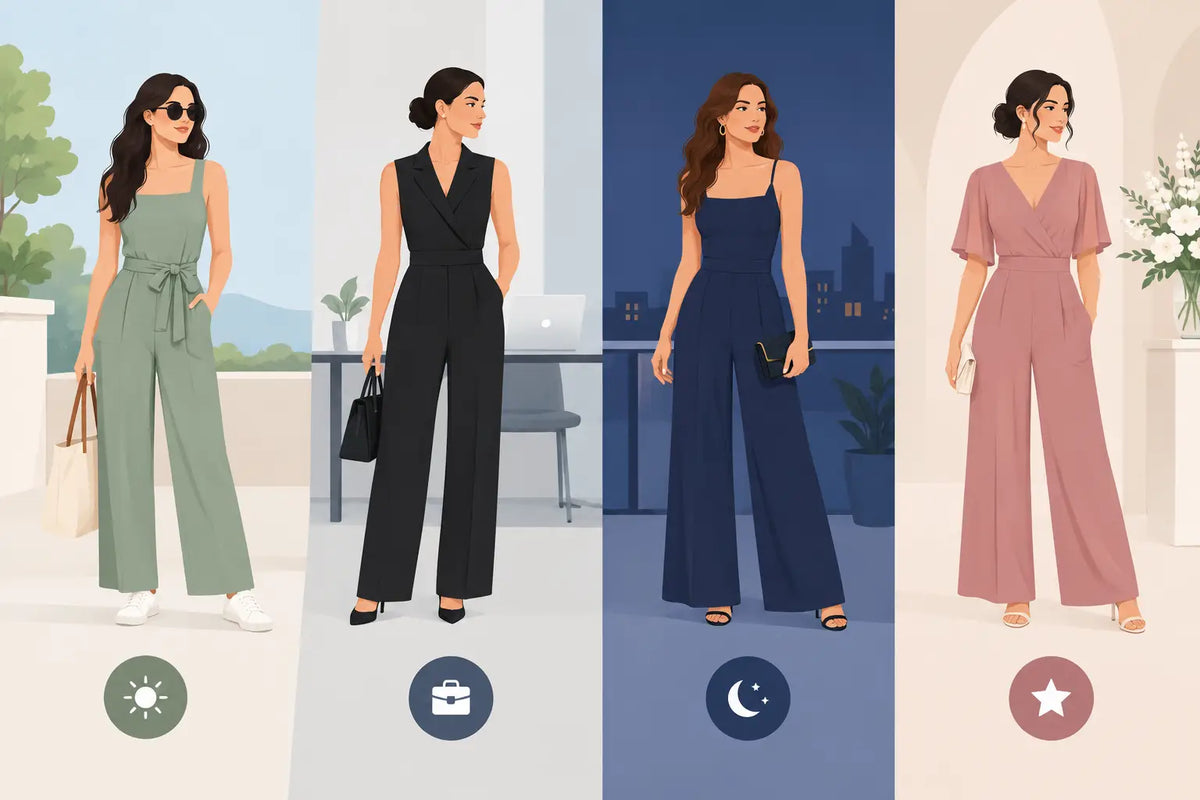
A Jumpsuit Dress Comparison by Occasion
The most useful jumpsuit dress comparison is not about which piece is better. It is about where each one earns its place in your wardrobe.
For work and polished plans
Choose a jumpsuit when you want the authority of tailoring without assembling separates. Look for a straight or wide leg, a defined waist, and a neckline that works with a blazer or lightweight jacket. Black, deep navy, soft stone, and olive are easy foundations for repeat wear. In a relaxed office, a linen jumpsuit with a clean collar or sleeveless cut can look intentional with loafers or low heels.
Choose a dress when your work wardrobe benefits from layering flexibility. A sleeveless midi dress can be worn alone in summer, then styled with a cardigan, blazer, or fine knit when the temperature changes. Shirt dresses and minimal column dresses are particularly useful because they can feel professional without looking overly formal.
For warm weather and travel
A dress often wins for ventilation. Natural fibers such as linen and cotton allow air to circulate, and a looser skirt keeps the silhouette light in hot weather. A midi or maxi dress also works well when you want one piece that can handle sightseeing, a long lunch, and an evening reservation.
A jumpsuit can still be the stronger travel piece if you value coverage and fewer styling decisions. A relaxed linen style offers breathability while protecting your legs from sun, cool airplanes, and overly air-conditioned restaurants. Prioritize an easy pull-on construction, adjustable straps, or a front closure if convenience is high on your list.
For either option, fabric matters as much as silhouette. Linen brings a naturally textured, lived-in finish and becomes softer with wear. Cotton feels familiar, breathable, and easy to reach for repeatedly. Wrinkles are part of linen’s character, not a failure of the garment. If you prefer a crisper look from morning through evening, choose a more structured cotton weave or a style with subtle volume that makes creasing feel intentional.
For weekends and events
A dress is the easy answer when you want softness, movement, or a more romantic silhouette. Add flat sandals for daytime, then switch to a heeled sandal and a defined bag for dinner. The change is simple because the dress already carries the visual interest.
A jumpsuit is a strong choice for events where you want to look dressed up but not overly done. It offers a quieter kind of confidence, especially in a minimal palette. A one-shoulder, halter, or sleeveless jumpsuit can stand in for an evening dress while feeling more unexpected. Keep accessories edited: sculptural earrings, a slim belt if needed, and shoes that lengthen the leg.
Fit Changes Everything
A beautiful fabric cannot compensate for a poor fit. With a jumpsuit, start at the torso. The rise should allow you to sit comfortably, and the waist should sit where your body naturally narrows rather than pulling upward or dropping too low. Check the shoulder straps or sleeve placement, then assess the leg length with the shoes you will wear most often.
Petite frames may prefer cropped, ankle-length, or tapered legs to keep the proportions clear. Taller frames can carry a full-length wide leg with ease, particularly when the waist is defined. If you have a longer torso, adjustable straps or a style with a flexible waist can make a major difference. A jumpsuit should skim the body, not ask you to hold yourself rigidly inside it.
For dresses, focus on the shoulder line, bust placement, and waist. A midi hem is not one fixed length: it can land at the narrowest part of the calf, mid-calf, or just above the ankle, and each placement changes the proportion. If a dress feels overwhelming, a waist seam, side tie, or open neckline can bring definition back to the look.
Fit should also account for the reality of your day. If you walk between meetings, ride public transit, or spend time outdoors, test how the garment moves rather than judging it only in front of a mirror. Raise your arms. Sit down. Take a few long steps. Consider whether you will reach for it again after a full day, not just whether it looks good for five minutes.
How to Make Each Piece Work Harder
The most sustainable choice is often the one you wear often, across more than one setting. A jumpsuit becomes more flexible when you treat it as a base layer. Wear it with a blazer for work, a cropped jacket for evening, or an open shirt for a relaxed weekend. A belt can shift the proportion, but only add one if the style needs definition. Not every jumpsuit benefits from being cinched.
A dress builds range through layers and footwear. A minimal midi dress can look sharp with loafers, relaxed with sneakers, and elevated with heeled sandals. Add a tailored waistcoat or lightweight knit to create shape without hiding the dress entirely. This approach keeps the wardrobe focused while giving a familiar piece a new purpose.
Color also affects repeat wear. Neutrals make outfit building simple, but they do not have to feel flat. Consider warm ivory, tobacco, soft blue, sage, or rich brown alongside black and navy. These shades pair naturally with leather accessories, simple metallic jewelry, and the tones already present in a considered wardrobe.
Choose the Piece You Will Reach For
Choose a jumpsuit if you want an all-in-one look with trouser coverage, clean structure, and a modern tailored feel. Choose a dress if airflow, quick changes, and easy layering matter more. If your wardrobe has room for both, let them do different jobs: a jumpsuit for composed days and a dress for lighter ones.
Start with natural fabric, a fit that lets you move, and a silhouette you can picture wearing at least three ways. The piece that feels effortless at 8 a.m. and still looks right at 8 p.m. is the one worth keeping close.