
How to Measure Trouser Inseams for a Better Fit
A trouser can have the right waist, the right fabric, and an otherwise perfect silhouette, then still feel wrong because the hem lands in the wrong place. To measure trouser inseams accurately, focus on where the inner leg begins and where you want the finished hem to fall. A few minutes with a tape measure can make online sizing, tailoring, and getting dressed feel far more considered.
What Is a Trouser Inseam?
The inseam is the measurement from the crotch seam to the bottom edge of the trouser leg, taken along the inside of the leg. It is not the same as the outseam, which runs from the waistband down the outside of the leg.
Inseam length shapes the whole proportion of a pair of trousers. A cropped straight leg can look intentional at an ankle-skimming length, while a wide-leg trouser often needs more length to create its clean, fluid line. For tailored pants, even a half-inch can affect whether the hem rests neatly on your shoe or bunches at the ankle.
The best inseam is not always a fixed number. It depends on your height, preferred rise, the cut of the leg, and the shoes you plan to wear most often. That is why measuring a pair you already love is usually more useful than relying on a generic chart.
How to Measure Trouser Inseams From a Pair You Own
Measuring a well-fitting pair of trousers gives you a practical reference point. Choose a pair with a similar silhouette to the one you are considering. For example, use a favorite straight-leg pant to assess another straight-leg style, rather than comparing it with a cropped flare or relaxed wide-leg trouser.
Lay the trousers flat on a clean, hard surface. Smooth the legs gently so the inner seam is straight, but do not stretch the fabric. Linen, cotton, and other natural fabrics can shift slightly when pulled, which can add unnecessary length to the measurement.
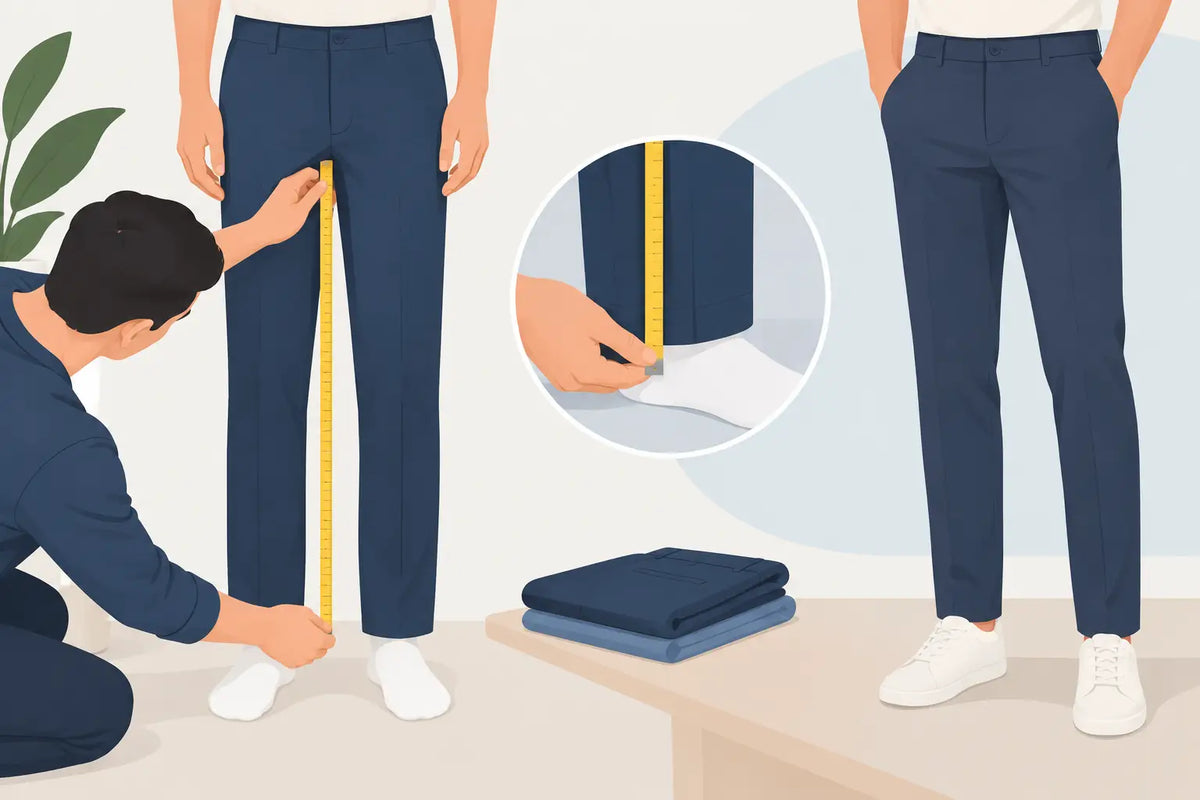
Find the point where the inseams meet at the crotch. Place the end of a flexible measuring tape at that intersection, then run it down the inside seam to the bottom of the hem. Record the measurement in inches. If the hem is uneven or the trousers have been altered, measure both legs and use the longer result as your reference.
For the most reliable result, measure twice. The tape should follow the seam rather than cut across the leg. If you only have a rigid ruler, work in smaller sections and add the figures together, keeping the ruler aligned with the seam each time.
Measure the finished length, not the folded fabric
A turned-up cuff, deep hem, or rolled ankle changes how trousers sit when worn. Measure to the finished bottom edge of the pant, not to a hidden seam allowance inside the hem. What matters is the visible length on your body.
If you are checking trousers with a cuff, keep the cuff in its normal position. If you tend to roll your casual pants, measure them both rolled and unrolled. This gives you two useful lengths: one for a relaxed weekend look and one for a more polished finish.
How to Measure Your Body for Trouser Inseams
A garment measurement is often easiest, but measuring your body helps when you are ordering a new shape or planning alterations. Wear slim-fitting clothing or leggings, and stand naturally with your feet about hip-width apart. Ask someone to help if possible. Self-measuring can pull the tape out of position at the crotch.
Start the tape at the highest point where your inner thighs meet. Let it run down the inside of your leg to the point where you want the trouser hem to finish. Keep the tape close to the leg without pulling it tight.
Wear the shoes you expect to style with the trousers. Flats, sneakers, loafers, heels, and boots all change the ideal finish. A full-length wide-leg trouser that works with a low heel may be too long with sandals. A cropped ankle pant, on the other hand, can be measured without shoes if you know exactly where you want the hem to break.
Body measurements are a starting point, not a rule. The crotch point is hard to locate precisely, and different rises change the relationship between the waistband and inseam. Use your body measurement alongside a pair of trousers that already gives you the look you want.
Choose the Right Inseam for the Trouser Shape
There is no single ideal inseam. The intended silhouette should lead the decision.
Straight-leg and tailored trousers
For straight-leg trousers, a clean hem usually lands at the top of the shoe or creates a slight break over the instep. This is a versatile choice for workwear, matching sets, and elevated everyday dressing. If the fabric pools around the ankle, the line loses its sharpness. If it stops too high, the result can look accidental rather than tailored.
A slim ankle-length trouser is different. Here, the hem typically sits just above the ankle bone or at the narrowest part of the ankle. That bit of space keeps the look light and intentional, especially with loafers, low heels, or minimalist sneakers.
Wide-leg trousers and relaxed pants
Wide-leg trousers need enough length to balance their volume. In most cases, the hem should skim the top of the shoe, leaving little more than the toe visible. Too-short wide legs can visually widen the frame, while an overly long hem risks dragging and wearing out quickly.
For relaxed cotton or linen pants, consider how the fabric behaves as you move. Softer plant-based fabrics may settle lower after an hour of wear than they do in a fitting room. A hem that just clears the floor at home can become impractical outdoors. When deciding between two lengths, the slightly shorter option is often the more wearable choice.
Cropped, flared, and tapered styles
Cropped trousers are designed around exposure at the ankle, but the exact placement changes the effect. A hem that ends two to three inches above the ankle bone tends to feel modern and easy. A longer crop can read more polished, particularly with a tapered leg.
Flared and bootcut trousers generally need a longer inseam than straight styles. The hem should nearly cover the shoe while staying clear of the ground. Because the leg opening is wider, a short inseam can make the flare appear abruptly cut off rather than balanced.
Account for Rise Before You Compare Measurements
Two pairs of trousers can share the same inseam and still look completely different. Rise is the reason. High-rise trousers begin higher on the torso, while mid-rise and low-rise styles sit lower, changing the overall length of the garment on your body.
When comparing product measurements, check both rise and inseam. A 30-inch inseam in a high-rise, wide-leg trouser may create a full-length look, while the same inseam in a lower-rise straight leg may sit closer to the ankle. The leg shape matters too, but rise provides the context that an inseam number alone cannot.
This is especially useful when building a small, hard-working wardrobe. Instead of looking for one universal inseam, identify the lengths that work for your favorite silhouettes: perhaps a cropped length for everyday tapered pants, a standard length for tailoring, and a longer option for fluid wide legs.
When to Alter the Hem
Hemming is one of the simplest clothing alterations, but it is worth getting right. Try trousers on at home with the shoes you will genuinely wear, then walk, sit, and look at the hem from the side. A pant that seems perfect while standing still may catch under your heel or rise noticeably when seated.
Leave a little flexibility with natural fabrics. Linen and cotton can shrink if they have not been pre-washed, and some fabrics relax with wear. If you are uncertain, ask a tailor to pin the hem first and live with the pinned length briefly before committing.
Avoid hemming too quickly when a trouser has a distinctive finish. A deep cuff, contrast stitching, split hem, or shaped leg opening may need specialist adjustment to preserve its original line. In those cases, taking off too much length can change more than the hem.
A well-measured inseam does more than prevent a trouser from dragging or looking too short. It lets the fabric, cut, and styling work as intended. Keep the measurement from your best-fitting pair in your notes, then use it as a quiet guide whenever you choose the next one.