
What to Wear Under Waistcoats: 8 Easy Looks
A waistcoat changes the shape of an outfit in seconds. It adds definition without the weight of a jacket, makes relaxed trousers feel considered, and offers a polished alternative to a full suit. The question of what to wear under waistcoats comes down to proportion, fabric, and where you are going.
For a wardrobe built around repeat wear, start with pieces that feel good on their own. A waistcoat should refine the layer beneath it, not hide an outfit that only works with tailoring on top. Think breathable cotton, airy linen, soft jersey, and clean silhouettes that move easily from work to weekend.
Start With the Waistcoat Fit
The right underlayer depends on the cut of your waistcoat. A tailored, close-fitting style needs a smooth base, while a more relaxed or longer silhouette can carry volume underneath. Before choosing a top, check the armholes, neckline, and button placement.
If the armholes sit high and the front is structured, avoid bulky sleeves and thick seams. A fitted T-shirt, sleeveless knit, or crisp shirt will sit cleanly. If the waistcoat is intentionally oversized, a looser poplin shirt or fine-gauge sweater gives the outfit a softer, more directional shape.
Buttoning also changes the effect. A fully buttoned waistcoat creates a neat, minimal line, especially with high-waisted trousers. Worn open, it becomes a light third layer and allows a simple tank, tee, or dress to show through. Neither approach is more correct. The choice is about how much structure you want from the outfit.
What to Wear Under Waistcoats for Work
A crisp cotton shirt
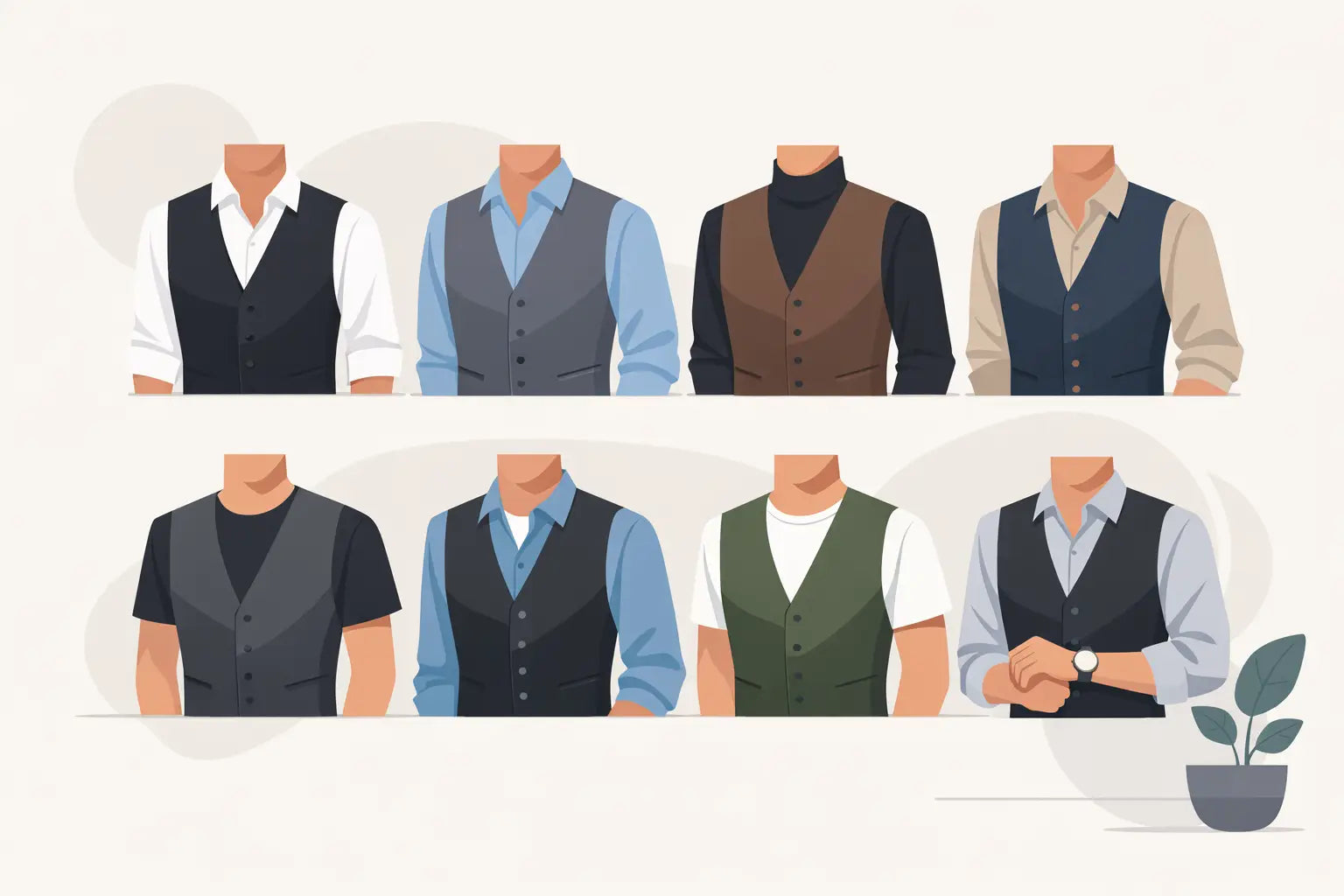
A cotton button-down is the most reliable workwear pairing. Choose a shirt with a pointed collar, a clean placket, and enough ease through the body to stay comfortable beneath the waistcoat. White, soft blue, black, and subtle stripes all work well because they keep the look focused.
For a modern finish, pair a matching waistcoat and tailored trousers over a white shirt. Keep the shirt cuffs visible and let the collar sit neatly above the waistcoat neckline. This creates the polish of suiting with more flexibility than a blazer.
Linen shirts are especially useful in warm climates. They bring a natural texture to tailoring and keep the outfit breathable. A linen waistcoat over a fine linen or cotton shirt can work beautifully, but vary the shades or textures slightly so the layers do not look flat.
A fitted knit top
A sleeveless knit or fine ribbed top offers a quieter alternative to a collared shirt. It is ideal for offices that lean creative, for dinner after work, or for days when you want tailoring to feel less formal. A crewneck knit creates clean coverage, while a mock neck adds a sharper, more elevated note.
Keep the knit lightweight. Chunky yarns can bunch at the armholes and disrupt the waistcoat's line. In cooler months, a fine merino-style knit or slim long-sleeve top gives warmth without adding unnecessary volume.
A high-neck jersey top
For a pared-back monochrome outfit, wear a high-neck cotton jersey top under a structured waistcoat. This combination is modest, refined, and easy to wear with wide-leg pants, straight trousers, or a midi skirt. It is also a practical solution when you want coverage without the formality of a shirt collar.
Choose a top that sits close to the body but does not feel restrictive. The contrast between soft jersey and tailored fabric makes the outfit feel balanced rather than overly corporate.
Easy Casual Layers Under a Waistcoat
A premium T-shirt
A well-cut T-shirt gives a waistcoat an off-duty mood. This is not the place for a stretched neckline or a very oversized tee. Look for opaque cotton, a neat crewneck, and sleeves that do not extend too far past the waistcoat armhole.
A white, black, stone, or muted neutral T-shirt works with nearly every waistcoat color. Wear it with relaxed jeans and flat sandals, or add tailored shorts for a warm-weather city look. The waistcoat supplies the structure; the T-shirt keeps it easy.
A ribbed tank
A ribbed tank is one of the simplest answers to what to wear under waistcoats in summer. It is cool, compact, and lets the waistcoat take center stage. Choose a tank with substantial straps and an opaque finish for a more polished effect, especially if you plan to wear the outfit beyond a casual setting.
A square neck feels clean and contemporary with a V-neck waistcoat. A crewneck tank feels more understated. With high-rise linen pants and minimal jewelry, the result is effortless without looking unfinished.
A lightweight long-sleeve top
When the weather is between seasons, a fitted long-sleeve top is an easy bridge. It offers more coverage than a tank but remains lighter than a sweater. Neutral cotton jersey is the most versatile option, while a subtle stripe can introduce interest beneath solid tailoring.
This is a useful travel combination too. A waistcoat, long-sleeve top, and relaxed pants can adapt to a cool flight, an air-conditioned restaurant, or a full day of walking without requiring multiple outfit changes.
Wearing Waistcoats Over Dresses and Skirts
A waistcoat does not have to be limited to pants. Over a simple column dress, it adds shape and breaks up a single block of color. Choose a dress with a smooth upper body, such as a sleeveless midi, a fitted T-shirt dress, or a slip dress with minimal detailing at the bust.
For a softer silhouette, wear an open waistcoat over a fluid dress. For more definition, button the waistcoat and let the skirt fall from underneath. The first option feels relaxed and layered; the second creates an almost suit-like line.
With skirts, keep an eye on where each piece ends. A cropped waistcoat usually works best with high-waisted midi skirts or trousers. A longer waistcoat can balance a slim skirt, but may overwhelm a full or tiered silhouette. If both pieces are voluminous, use a fitted top underneath to restore shape.
Fabric Matters More Than You Think
A waistcoat is often chosen for its tailoring, but its comfort depends on the layers beneath it. Natural fabrics make the outfit easier to wear for longer. Cotton absorbs well and feels familiar against the skin. Linen is breathable and gives a relaxed texture that suits warmer days. Fine knits work well for cooler weather when the fabric is smooth enough to layer.
Try to avoid pairing a stiff waistcoat with a stiff underlayer unless you want a deliberately formal look. Two structured pieces can feel restrictive, particularly across the shoulders and armholes. One tailored layer and one softer layer usually creates the most wearable result.
Color should be considered in the same way. A tonal outfit in ivory, sand, black, navy, or olive feels intentional and extends the life of each piece in your wardrobe. For contrast, keep it purposeful: a white shirt beneath a dark waistcoat, a black tank under natural linen, or a soft blue shirt with warm beige tailoring.
Details That Keep the Outfit Polished
The smallest adjustments make a waistcoat outfit look finished. Tuck in tops when the waistcoat is tailored or cropped, particularly with high-waisted bottoms. Leave a tee untucked only when it is slim and the waistcoat is worn open. A loose hem showing below a buttoned waistcoat can interrupt the silhouette.
Consider the neckline before adding accessories. A V-neck waistcoat leaves room for a fine chain or small pendant, while a shirt-and-waistcoat combination often needs nothing more than simple earrings or a watch. Keep belts clean and minimal if they are visible between the waistcoat and trousers.
Shoes should follow the mood of the underlayer. Loafers or sleek flats sharpen a shirt-and-waistcoat outfit. Leather sandals soften linen tailoring. Clean sneakers make a T-shirt and waistcoat feel contemporary, as long as the rest of the outfit remains streamlined.
The Best Rule: Let One Piece Lead
If the waistcoat is sharply tailored, keep the layer underneath simple. If your shirt has texture, volume, or a noticeable collar, choose a cleaner waistcoat and uncomplicated bottoms. A considered outfit does not need every element to make a statement.
Build from comfort first, then add structure. A breathable top you would happily wear alone will make your waistcoat feel like a natural part of your wardrobe, not a piece reserved for special occasions.