
A Sustainable Closet Transformation That Lasts
The most useful item in your closet is rarely the newest one. It is the shirt that works under a blazer, with relaxed trousers, and over swimwear on a warm weekend. A sustainable closet transformation begins there: with clothes that earn their place through repeat wear, not a complete replacement of everything you own.
The goal is not a perfectly neutral wardrobe or a rigid capsule with a prescribed number of pieces. It is a wardrobe that feels edited, personal, and ready for real life - meetings, travel, slow mornings, dinners out, and every change of plan in between. Buy less pressure. Build more possibility.
Start Your Sustainable Closet Transformation With What You Have
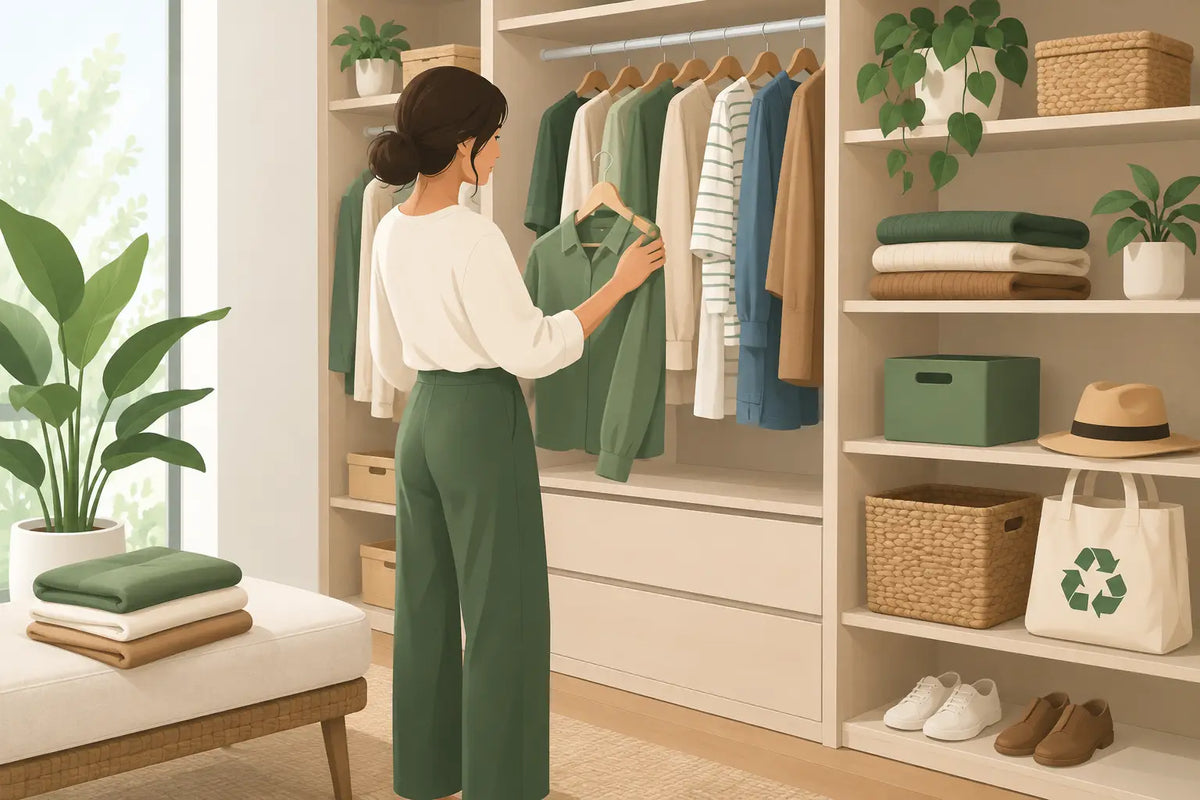
Before adding anything, make space to see what is already working. Pull out the pieces you reach for most: the breathable shirt, the trousers with the right drape, the dress that needs almost no styling, the jacket that makes an outfit feel finished. These are not just favorites. They are evidence of your personal uniform.
Then separate the rest into three groups: pieces that need a simple repair or alteration, pieces that no longer fit your style or life, and pieces you are keeping out of habit. Be honest about the last category. A garment can be well made and still not be right for you. Passing it on responsibly gives it a better chance of being worn.
This process is not about judging past purchases. It is about recognizing patterns. Perhaps you consistently choose relaxed tailoring over body-conscious silhouettes, or reach for long sleeves for work and lightweight layers for travel. Maybe your closet already has enough tops but lacks bottoms that work with them. A clear edit turns vague shopping into intentional decisions.
Try every piece on with the shoes, underlayers, and outerwear you actually wear. A blouse that seemed difficult may work perfectly with one pair of trousers. A blazer that feels too formal may become an everyday layer with a soft cotton tee. Styling before shopping is one of the simplest ways to extend a wardrobe.
Build Around Repeatable Outfit Formulas
A considered closet does not need endless variety. It needs combinations you can rely on. Start with two or three outfit formulas that match your routine. For a polished workday, that might be a structured blazer, breathable top, and wide-leg trouser. For off-duty hours, a relaxed shirt with straight-leg bottoms may do more than several trend-led separates. For travel, a matching set can move easily from airport to dinner with a change of shoes and accessories.
The power of a formula is that it reduces the chance of buying one-time pieces. When you know the silhouettes that make you feel composed, you can assess a new garment quickly: Does it work with at least three things I own? Can I wear it across more than one setting? Would I choose it again next season?
Color matters, but it does not have to mean beige, black, and white only. A strong foundation may include warm ivory, navy, olive, chocolate, or soft blue, then make room for a color that feels distinctly yours. The key is connection. If a new color works with your existing trousers, layers, and shoes, it becomes part of the wardrobe rather than an isolated moment.
Proportion is equally useful. If your preferred trousers are wide and fluid, balance them with a fitted knit, a tucked-in shirt, or a shorter jacket. If you favor an oversized shirt, pair it with a cleaner bottom. These small decisions help fewer garments create more complete looks.
Choose Fabrics for Your Climate and Calendar
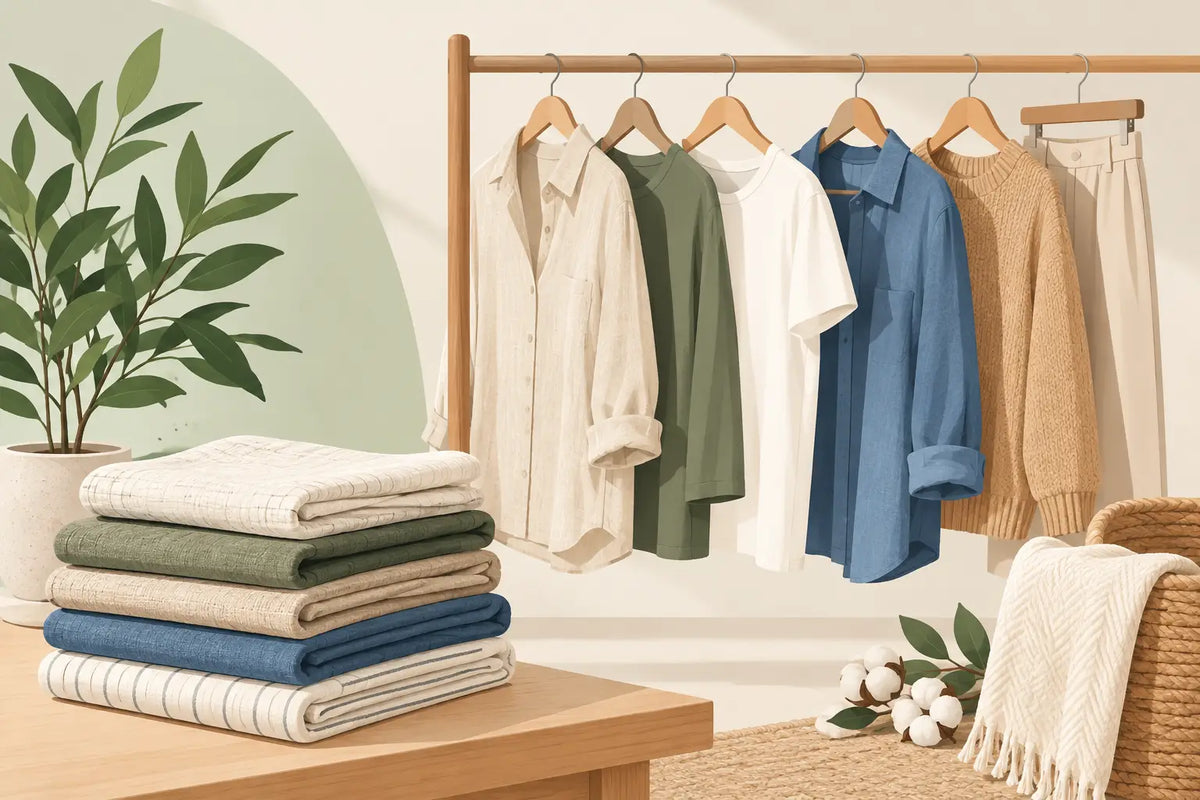
Sustainability is often discussed as a material question, but fabric should also support how and where you live. Natural and plant-based fibers such as linen and cotton are valued for good reason: they can feel breathable, comfortable, and easy to wear in warm weather. They also suit the relaxed refinement of an everyday wardrobe.
Still, no fiber is automatically the right choice in every garment. Linen's natural texture and tendency to crease are part of its character, but it may not suit someone who wants a very crisp, wrinkle-resistant work look. Cotton can be versatile and soft, though a lightweight cotton top and a densely woven cotton jacket will perform very differently. Read the fabric composition, feel the weight, and consider the garment's intended use.
For workwear, look for pieces with enough structure to hold their shape through a long day. For resort wear or summer dressing, prioritize airier weaves and silhouettes that allow movement. For loungewear, comfort matters, but so does construction: a well-cut sweatshirt or relaxed pant should still feel presentable beyond the sofa.
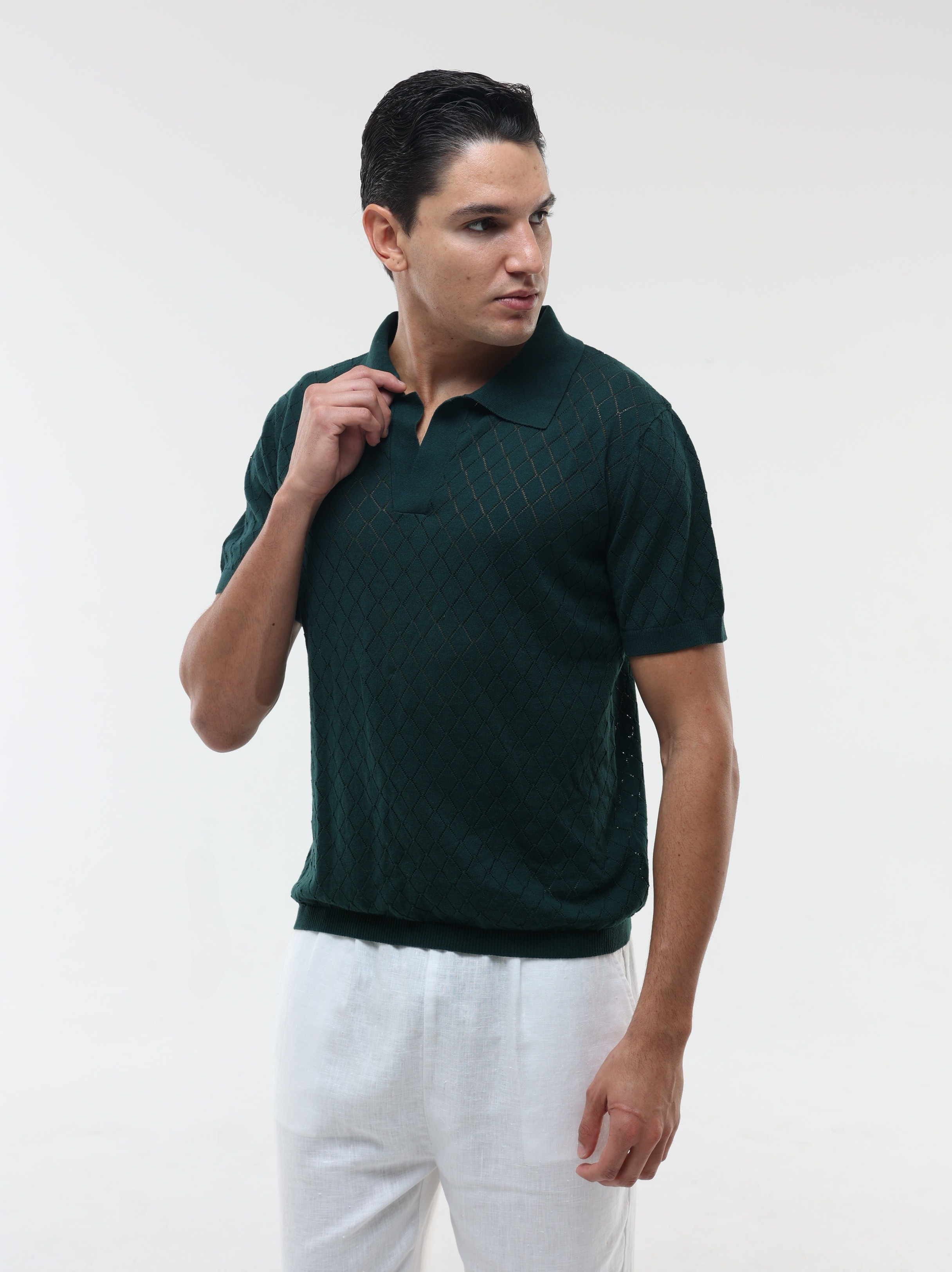
At ZAVI, consciously designed linen and cotton styles are made to support this kind of repeat wear - modern, adaptable pieces that work across the day rather than for one occasion alone.
Fill Gaps, Not Carts
Once your foundations are visible, make a short gap list. Keep it specific. “Better clothes” is not a gap. “A lightweight blazer that works with my existing trousers and denim” is. “Two breathable tops that layer under jackets” is. “A versatile dress for work, travel, and dinner” is.
Shop from that list for a set period, and leave anything else in your cart for at least a day. The pause is useful because desire and need are not always the same. If you are still thinking about the item after considering the cost per wear, fabric, fit, and styling options, it may be a thoughtful addition.
Price alone is not a measure of sustainability. An expensive item that remains unworn is not a responsible purchase, while a reasonably priced basic worn weekly for years can be an excellent one. Consider value through use: how often will you wear it, how easily can it be cared for, and does it fit the life you actually lead?
Fit deserves the same level of attention. The right shoulder line, rise, sleeve length, and hem can transform how often a piece gets worn. If a minor alteration would make a garment indispensable, it may be worth doing. Tailoring is not reserved for occasionwear. It is one way to make a wardrobe feel more like your own.
Make Care Part of the Design
The life of a garment continues after purchase. Washing less often when appropriate, treating marks promptly, and following care instructions can preserve color, shape, and texture. Airing out a linen shirt or blazer between wears may be enough. Washing on cooler settings and avoiding unnecessary high heat can also be gentler on fabrics.
Storage changes the equation, too. Fold knits to prevent stretching. Give jackets and shirts hangers that support their shape. Keep clothes clean before putting them away for a season, and repair loose buttons or small seams before they become reasons to stop wearing a piece.
A closet that is easy to see is easier to use. Grouping by category can help, but there is no single correct system. Some people prefer arranging by color; others keep complete outfit components together. Use the approach that makes getting dressed feel calm and immediate.
Let Your Closet Evolve Slowly
A sustainable wardrobe is not finished in one weekend. Your work may change. You may move cities, travel more, or find that a silhouette you once avoided is now the one you wear most. Leave room for that evolution without treating every new season as a reason to start over.
When something does come in, let something else be reassessed. Not as a strict rule, but as a quiet habit of attention. This keeps your closet aligned with your current life and prevents the slow return of clutter.
The best next purchase is the one that makes tomorrow morning easier: a piece you can wear often, care for well, and style in ways that still feel like you.