

المقال: How to Pack Linen Resortwear Without the Creases
How to Pack Linen Resortwear Without the Creases
A warm-weather wardrobe should feel light before you leave home. The key to how to pack linen resortwear is not trying to make linen behave like synthetic fabric. Linen has a natural texture and will crease - that is part of its relaxed, breathable appeal. Pack with intention, choose pieces that work together, and arrive with clothes that still feel considered.
Start With Linen That Earns Its Place
Resort packing is less about bringing more options and more about bringing the right ones. Begin with pieces that can move between settings: a linen shirt worn open over swimwear in the afternoon, then buttoned with tailored trousers for dinner; a sleeveless linen dress that needs only a change of shoes; or a matching set that creates a complete look in seconds.
Favor relaxed silhouettes over overly structured ones. Wide-leg trousers, softly cut shirts, drawstring pants, shirt dresses, and easy jumpsuits tend to travel well because their shape does not depend on a sharp press. A fitted linen blazer can work beautifully for a city-focused itinerary or an evening reservation, but it requires more protection and should be worn in transit if space is limited.
Natural fabrics are especially suited to resort travel because they breathe in humid weather and feel comfortable from morning through late evening. Still, fabric weight matters. Lightweight linen is ideal for heat but will show more creasing. Midweight linen has greater structure and is often the better choice when your plans include dinners, events, or polished daytime dressing.
Build a Small Resort Capsule First
Pack outfits, not separate possibilities. Start with a restrained color palette - perhaps ivory, black, sand, olive, or soft blue - then choose one accent color or print. This approach makes every top, bottom, and layer easier to combine, which means a smaller suitcase and more repeat wear.
For a five- to seven-day escape, a thoughtful edit may include two linen bottoms, one dress or jumpsuit, two to three tops, one linen shirt, and one matching set. Add swimwear, a light layer for air-conditioned spaces, and shoes that serve distinct purposes. The exact quantity depends on your access to laundry and the kind of trip you are taking. A beach-focused stay calls for more easy separates, while a resort wedding or food-and-city itinerary may justify an extra elevated piece.
Think in outfit formulas before you pack. A linen tank with relaxed trousers works for coffee runs and sightseeing. A button-down shirt with the same trousers feels more refined. A co-ord set creates an intentional look without requiring additional styling. This is the value of a minimal wardrobe: each piece has more than one role.
ZAVI's approach to consciously designed, plant-based fabrics fits naturally here. Linen pieces chosen for repeat wear are not just practical for one trip - they return home ready for weekends, workdays, and the next departure.
How to Pack Linen Resortwear, Step by Step
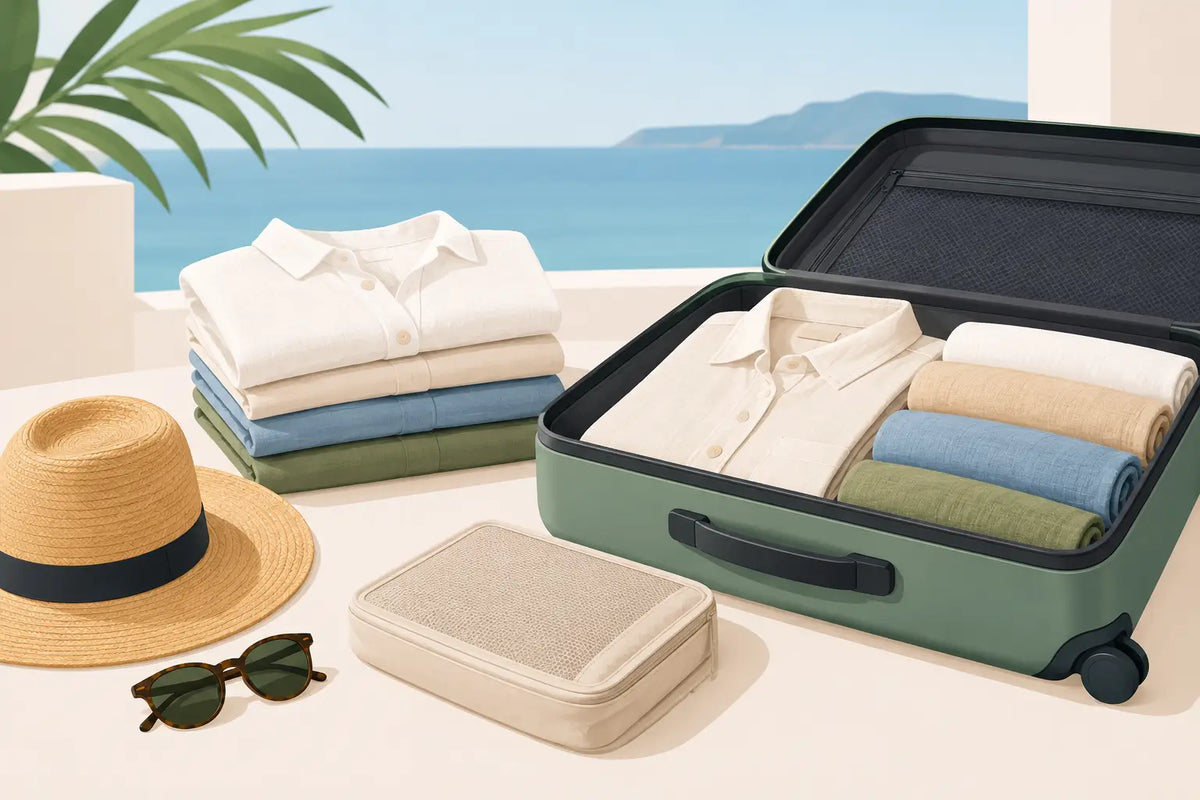
The most effective technique is a combination of folding, rolling, and layering. Do not tightly compress linen into a solid bundle. Excess pressure creates deep, sharp wrinkles that are harder to relax once you arrive.
Fold Along Natural Seams
Button shirts before packing, then smooth them flat with your hands. Fold sleeves inward at the shoulder seam and fold the body into a neat rectangle. For trousers, align the legs, fold once lengthwise if needed, then fold loosely from the hem upward. Dresses and jumpsuits should be folded along their natural lines rather than twisted into a tight roll.
Rolling works well for uncomplicated pieces such as linen tanks, T-shirts, casual shorts, and soft drawstring pants. It keeps them compact and reduces hard horizontal fold lines. The goal is a loose, even roll, not a tightly wound cylinder.
Put Heavier Items at the Bottom
Place shoes, toiletry bags, and heavier non-linen items at the bottom of the suitcase, closest to the wheels. Keep them in separate bags so they cannot transfer dirt or snag delicate fabric. Add sturdier folded items next, then place linen on top where it will not be crushed.
If you are using a hard-shell suitcase, avoid filling it to capacity. Leaving a little room allows linen to sit without aggressive compression. In a soft-sided weekender, pack the most crease-prone pieces near the top and avoid placing a bag, laptop, or heavy accessories over them.
Use Tissue or Dry-Cleaning Bags Between Layers
A simple layer of clean tissue paper or a reused dry-cleaning bag reduces friction between garments. Friction is what creates many of the fine wrinkles that appear during transit. Place a layer between a folded dress and trousers, or wrap a linen shirt before placing it on top of other pieces.
This is particularly useful for light-colored linen, which can pick up marks easily inside a suitcase. If you prefer packing cubes, choose larger cubes rather than overstuffed small ones. Cubes help organize a capsule wardrobe, but a tightly packed cube can undo the benefit.
Reserve One Look for the Plane
Wear your bulkiest linen piece if the journey is short and the climate is warm when you land. A relaxed shirt, linen-blend pants, or an easy matching set can save valuable suitcase space. For a long flight, however, comfort comes first. It may be wiser to travel in soft cotton or jersey and keep your linen clean and lightly folded for arrival.
Pack Shoes and Accessories With Restraint
Shoes take up more space than almost any garment, so choose them with purpose. A refined flat sandal, a comfortable walking shoe, and one evening option are often enough. If your itinerary includes a pool or beach, a simple slide can double as a room shoe.
Accessories are where a compact resort wardrobe becomes personal. A woven bag, understated jewelry, sunglasses, and a lightweight scarf can shift the same linen set from day to night. Put jewelry in a small pouch and store structured accessories around the edges of the suitcase, where they can help protect softer garments without pressing into them.
Skip the temptation to pack an accessory for every outfit. When the clothing palette is cohesive, a few well-chosen pieces look more polished than an overfilled bag.
Refresh Linen as Soon as You Arrive
Unpack linen first. Hang shirts, dresses, and trousers in the bathroom while you shower, allowing the steam to soften travel wrinkles. Smooth the fabric gently with clean hands, pulling it into shape at the seams rather than stretching it. This is often enough for relaxed resort pieces.
For more visible creases, use a garment steamer on low to medium heat. Hold it slightly away from the fabric and move steadily, especially around collars, plackets, waistbands, and hems. If an iron is your only option, check the care label and use a linen setting with steam. Ironing while the fabric is slightly damp usually gives a cleaner result than pressing fully dry linen.
Do not over-press every crease out of the fabric. Linen looks best when it retains a little movement and texture. The aim is fresh, not rigid.
Avoid the Packing Habits That Create Creases
The most common mistake is packing too much. A suitcase that barely closes puts pressure on every layer, and linen will show it immediately. The second is folding pieces too many times to fit a small compartment. Fewer, broader folds are usually better than several tight ones.
Avoid packing linen while it is even slightly damp from washing or steaming. Moisture trapped in a closed suitcase can create odor, set wrinkles, and leave marks. Give garments time to dry completely before they go in. It is also wise to keep sunscreen, self-tanner, and makeup in sealed bags. Linen's natural fibers can be vulnerable to stains, particularly in lighter shades.
If a garment arrives with a stubborn crease, do not assume it is ruined for the trip. Steam, a little humidity, and a few hours on a hanger can make a significant difference. Resort dressing should look effortless because it is built around pieces that are meant to breathe, move, and be worn again.